
You've picked the date, but the rest of the party still feels like a pile of unanswered questions. When should you book the entertainment? How many guests will come? Does the venue need insurance documents? Where can a rental truck park, and what happens if rain changes the plan?
A chronological birthday party planning checklist turns those questions into decisions you can handle in the right order. The early stages protect your budget and secure the venue, vendors, and attractions. The later stages focus on RSVPs, food, access, safety, weather, and the final run sheet.
This approach also helps you spend your effort where it matters. One independent study found that 70% of parents plan a child's birthday party within one to three months, while more than half spend over five hours planning and more than 20% spend over 15 hours, as reported in this birthday party planning research. Use the checklist below as a print-friendly sequence, and confirm rental-specific details before event day, including access windows, certificates of insurance, electrical needs, operator requirements, and teardown responsibilities. If decorations are still on your mind, this guide to how to decorate with balloons for a can help after the practical foundations are settled.
1. Set Your Date, Time, and Budget
Choose the date, party duration, and spending limit before contacting vendors. A Saturday afternoon may suit a children's celebration, while a weekday evening can fit an adult birthday or workplace gathering. Build the schedule around more than guest arrival and departure. Rental suppliers may need separate windows for delivery, setup, operation, and removal.
Set a budget that includes the venue and attraction, plus food, cake, decorations, invitations, supplies, staffing, transportation, insurance documents, permits if required, and a weather solution. Divide expenses into must-have costs and upgrades. A safe attraction, suitable space, food, and supervision come first. Premium décor, extra rentals, and specialty favors can wait until the remaining balance is clear.
Vendor price often affects which options stay practical. According to the birthday party vendor research, cost ranked as the top factor in vendor selection, ahead of ease of booking and communication and reviews. Use the checklist to control spending, not only to track supplies.
Practical rule: Request written quotes early. Confirm whether delivery, setup, professional operation, insurance documents, and teardown are included or billed separately.
Write down the financial boundaries
Use a worksheet with these fields:
- Total limit: Record the maximum you are comfortable spending.
- Core experience: Choose the attraction or activity guests will remember.
- Flexible extras: Mark décor, favors, specialty food, and add-on entertainment as optional.
- Contingency: Reserve room for unexpected delivery, weather, or venue costs without assigning an unsupported percentage.
Record the venue's access window beside each rental quote. A supplier may require a clear path, power outlet, covered staging area, or trained operator, and those requirements can affect the final cost and timing.
A July backyard party planned in May may offer more choice among bounce houses, arcade games, or interactive attractions than a last-minute booking. Secure limited-availability items before purchasing decorative details.
2. Determine Guest Count and Age Range
Start with a usable estimate, not a perfect RSVP total. Count invited children, likely siblings, parents, and other adults who may stay. Separate the age groups, then record parent contact details, allergies, mobility needs, emergency contacts, and whether each child will be dropped off or accompanied.
The count affects food, seating, parking, supervision, emergency planning, and the size of the usable party area. Age changes the activity plan. Younger children often need simple activities with close supervision, while tweens, teenagers, adults, and mixed-age families may prefer competitive attractions alongside quieter choices.
Practical rule: Choose activities for the people attending, then confirm that the venue can support their movement, supervision, and comfort.
A group of children aged eight to twelve might enjoy a bounce house, obstacle course, laser tag, or arcade games. A multigenerational gathering needs more balance: an active children's area, mini golf or games for adults, and a photo booth that gives different age groups a shared activity. Review these kids party entertainment options when planning for younger guests.
Build the activity plan around real use
Before requesting a quote, ask the rental provider:
- Age suitability: Which guests may participate, and what restrictions apply?
- Capacity and flow: How many people can use the attraction at once, and will queues form?
- Supervision: Does the rental include an operator, or must the host assign an attendant?
- Accessibility: Can guests with mobility or sensory needs participate comfortably?
- Energy balance: Is there a calm activity for guests who prefer less intense play?
Check the attraction's footprint against the venue's usable space, not just the guest count. Leave room for lines, tables, walkways, and adults supervising children. Confirm access, power, operator requirements, and setup time with the rental company before finalizing the order.
Keep some flexibility for late additions, then give the vendors and caterer one confirmed number before the event. A smaller mix that suits the guests is easier to supervise than several attractions that create noise, queues, or confusion.
3. Select and Reserve Your Venue
Reserve the venue only after confirming how guests, delivery crews, and rentals will use it. A backyard offers flexibility, but inspect the ground, gates, driveway, power access, drainage, and nearby hazards. A park pavilion may provide shelter while requiring permits, approved vendors, noise limits, parking arrangements, or specific cleanup procedures. An indoor hall simplifies weather planning, though its rules may restrict inflatables, mechanical attractions, food service, or amplified music.
Request the venue rules in writing. Confirm whether third-party vendors are permitted, which insurance documents are required, and whether a certificate of insurance must name the venue. Ask about equipment, occupancy, and electrical limits. Get the exact setup and teardown windows, rather than relying on the guest rental period.
Check the rental path before paying
Walk the route from the delivery vehicle to the planned setup area with the rental company's equipment in mind. Measure usable floor space, doorway width, ceiling height, ramps, stairs, and tight turns. Check whether the surface needs protection and whether the route remains clear during guest arrival. A rental can fit inside the room and still fail at the entrance.
Use this quick confirmation list with both parties:
- Access: When may the crew arrive, and who provides entry?
- Documentation: Does the venue require a certificate of insurance or safety paperwork?
- Utilities: Are standard outlets available, or does equipment need a dedicated circuit?
- Operations: Must a trained operator stay with the attraction?
- Weather: Is an indoor backup area available, and what postponement process applies?
- Removal: Can the crew load out immediately, or must equipment wait for a later window?
Power and access often determine whether a rental works more than the room's appearance does. Confirm parking for the delivery vehicle, the equipment route, electrical needs, operator responsibilities, and safety boundaries before signing the reservation.
Reserve the venue only when the rental can arrive, operate safely, and leave within the agreed windows.

4. Choose Entertainment and Attractions
Party entertainment must match the guests, venue, budget, and time available. Start with the birthday person's interests, then check how many guests need an activity at once and whether everyone can participate comfortably.
Build a mix of active, social, and low-pressure choices. An obstacle course or laser tag session brings energy, while arcade games, mini golf, a photo booth, crafts, or a DJ give guests other ways to join in. A mobile escape room or virtual reality experience can suit a venue with limited floor space, provided the delivery route, electrical supply, and operating conditions are suitable.
Avoid booking several large attractions without planning guest flow. Waiting lines can crowd the room and reduce time for conversation, food, and photos. Ask each provider for setup dimensions, access requirements, operating instructions, safety boundaries, and a layout based on the actual venue.
Choose entertainment that gives shy children, guests with mobility limitations, and adults who prefer conversation a clear way to participate.
Build a balanced activity mix
For a children's party, pair one anchor attraction with a quieter option and a scheduled group activity. Teen and adult celebrations can use competitive games, but reserve space for conversation, food, and photos. Mixed-age parties may need separate sessions for incompatible age groups, with adults supervising transitions.
Confirm the rental's practical requirements before paying the deposit. Ask whether a trained operator must remain onsite, how much open space the equipment needs, what power supply it uses, and whether the provider can move it indoors if weather changes. Record the arrival, setup, operating, and collection windows in the party run sheet.
Phantom Entertainment offers attractions including bounce houses, mobile escape rooms, mechanical bulls, laser tag, arcade games, DJs, karaoke, photo novelties, and other event options through its birthday party ideas and suggestions. Use the provider's experience to compare equipment, supervision, and venue fit rather than choosing by attraction count alone.
If you are comparing packages, calculate the work included. Delivery, setup, trained operation, and coordinated teardown can reduce the host's responsibilities more than several lower-cost standalone rentals. Check whether insurance documents or venue approvals are included, or whether you must obtain them separately.
5. Plan Food and Beverage Menu
Food choices should match the party schedule, guest profile, venue rules, and attraction layout. A focused menu reduces serving, labeling, heating, and cleanup work. Confirm the final guest count before buying perishables, and keep a small amount of flexible food for late additions.
Group the menu into main items, fruit or vegetables, snacks, cake, and beverages. Collect vegetarian, vegan, gluten-free, religious, and allergy requirements with the RSVP. Label allergen-aware dishes clearly, and use separate serving utensils where appropriate.
Match the menu to the format. A children's party might use pizza, fruit, vegetable sticks, juice, water, and cake. An adult celebration may suit appetizers, more substantial food, coffee, and nonalcoholic drinks. A workplace or community event may need a buffet that remains available as guests arrive and leave.
Reserve enough table space for food service without reducing the open area needed for guests, staff, or rental equipment.
Keep food away from rental traffic
Set food and drinks outside the active equipment zone. Guests with open cups should not pass through an attraction entrance. Tables must not block emergency exits, operator sightlines, or the delivery route. For outdoor parties, provide shade or a covered serving area, and prepare containers for food waste.
Schedule the main meal during a natural pause. Cake usually works best after the main activity, when guests can gather and a photographer or helper can capture the moment. If a vendor is delivering, provide the same access instructions and arrival window given to the rental company.
Phantom Entertainment's food and fun options can be reviewed alongside the entertainment plan. Whether you choose a caterer, local restaurant, or self-serve menu, confirm delivery timing, table requirements, refrigeration, cleanup, and disposal before the final week. Check whether the venue permits outside food, heating equipment, or alcohol, and record those decisions in the run sheet.
6. Send Invitations and Track RSVPs
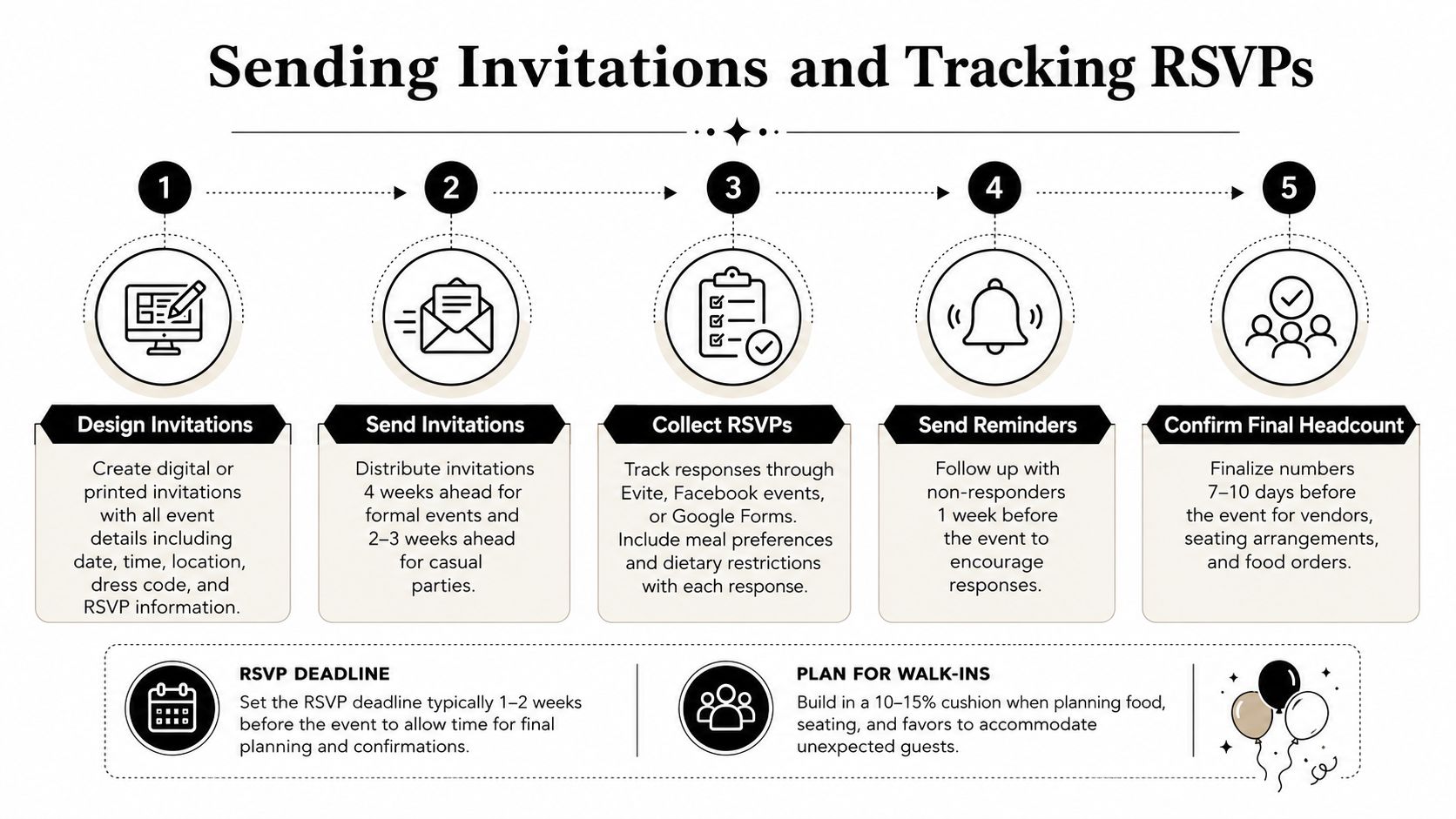
An invitation should prevent questions on party day. State the date, start and end times, exact location, parking instructions, RSVP deadline, drop-off policy, weather plan, dress guidance, and equipment requirements. If guests need closed-toe shoes, swimwear, socks, or a change of clothes, list those items plainly.
Describe the activity accurately. A survey of U.S. parents found that 34% said more games and activities would have made the party better, while 23% wanted a special theme or decorations, according to this birthday celebration survey. Clear details help families decide whether the attraction suits their child and whether they can prepare for it.
Digital invitations simplify response tracking, especially for dietary details and parent contacts. Printed invitations work for formal celebrations or school-aged children, but require a separate record. A spreadsheet can track:
- Guest: Name, age group, and RSVP status.
- Parent contact: Emergency number and preferred communication method.
- Participation: Height, mobility, or supervision information relevant to attractions.
- Food safety: Allergies and dietary restrictions.
- Arrival: Transportation and accessibility requirements.
- Gifts: Whether the guest plans to bring one.
Make the RSVP deadline useful
Set the deadline early enough to confirm food, seating, transportation, attraction requirements, and rental staffing. Follow up privately with people who have not replied. Record “not attending” as carefully as “attending,” because an unclear response can distort the final plan.
Send one concise reminder with the address, parking details, start time, weather policy, and required items. Once the response window closes, give vendors the confirmed headcount and updated notes. If an attraction requires an operator, supervision, or specific access conditions, share those confirmed details with the rental company before setup planning begins. Keep the final guest list with the run sheet so the day-of contact can check arrivals and respond to changes.
7. Coordinate Logistics and Setup Schedule
A reliable setup plan starts with venue access, not decorations. Confirm the vendor arrival window, unloading route, installation area, safety-check time, food delivery, guest entry, activity changes, cake service, cleanup, and equipment removal. Write each handoff into a schedule that someone else can follow.
Send every relevant vendor the venue address, access instructions, day-of contact number, parking location, floor plan, and setup restrictions. Rental crews may need a clear path, suitable parking, power, water, or a specific surface. Confirm these details with the venue instead of assuming its manager has briefed the crew.
Build a run-of-show that people can follow
For a three-hour party, allow time for vendor setup before guests arrive. Start with informal play, run the main attraction after guests settle in, pause for food, gather everyone for cake, then leave room for final play and goodbyes. Let the attraction, children's ages, and venue rules determine the order.
Assign a day-of point person who is not hosting, greeting every guest, or celebrating. This person meets the delivery crew, answers venue questions, tracks the schedule, coordinates food, and handles changes. Add buffer time so a delayed delivery or slow transition does not force cake service into the teardown window.
A short run sheet prevents small delays from becoming vendor overtime or rushed cleanup.
Use this logistics check:
- Venue access: Confirm who opens doors, gates, elevators, and loading areas, and record any access deadlines.
- Electrical needs: Ask which equipment uses standard outlets and whether audio equipment needs a dedicated circuit.
- Insurance documents: Check whether the venue requires certificates of insurance or other paperwork before setup.
- Operators: Confirm which attractions require professional operation and who supervises remaining activities.
- Weather and safety: Define the covered or indoor setup area, surface requirements, wind or rain decision, anchoring plan, and emergency access.
- Guest flow: Mark entry, restrooms, food, activities, exits, and a quiet space.
- Teardown: Confirm the removal window, equipment condition requirements, and who packs leftover supplies.
8. Arrange Transportation and Parking
A delivery truck arriving through the same entrance as birthday guests can create delays, blocked walkways, and unnecessary safety risks. Plan two arrival routes whenever possible: one for guests and another for rental equipment.
During the site visit, mark guest parking, accessible spaces, vendor loading, overflow parking, and the route from unloading to the attraction area. Confirm the exact entrance for a park or school instead of relying on its general address. For a backyard party, tell guests which driveway or street area must stay clear. Check whether gates remain open for late arrivals and whether the venue limits commercial vehicles.
Build a clear arrival plan
Reserve a loading point for the rental company and keep it free of cars, chairs, decorations, and food tables. Send the provider details about narrow doorways, elevators, stairs, timed loading areas, or long walks from the parking area. Confirm that the equipment can reach its setup location without crossing an unsafe route.
Add these details to the invitation and reminder:
- Directions: State which entrance guests should use.
- Parking: Explain whether spaces are on-site, nearby, limited, or paid.
- Accessibility: Identify the closest accessible space and route.
- Vendor access: Mark the loading area and keep it clear.
- Departure: Tell guests whether cars may remain after the formal party ends.
Assign a welcome person or parking guide if the venue is unfamiliar or the guest list is large. A simple sign, cone, or person at the entrance can keep guests away from setup work and prevent vehicles from blocking the delivery crew.
Before the event, inspect the route after rain if possible. Avoid low spots where water collects, and keep emergency access open. Record parking instructions, contact names, loading limits, and arrival times on the final run sheet so the host is not answering traffic questions while greeting guests.
9. Create a Weather Contingency Plan
Set the weather decision before the forecast becomes urgent. Rain is only one risk. Wind, heat, cold, lightning, snow, and wet ground can affect guest comfort, food safety, equipment stability, and safe operation.
Write down four items: the backup location, the person who decides, the communication method, and the decision deadline. A usable plan might move the party to an indoor room, confirm that each attraction fits through the access route, and tell families when they will receive an update.
For inflatables and other outdoor equipment, follow the supplier's operating rules instead of judging conditions independently. Review this guidance on weather, wind, and inflatables with the rental provider. The provider and venue should make the event-specific operating decision.
Prepare for comfort as well as cancellation
A tent can shelter food and seating while leaving attractions, electrical equipment, or wind exposure unresolved. An indoor backup needs enough clearance, suitable flooring, power, restrooms, and safe guest flow. Confirm setup and teardown time as well, because a weather change may require the vendor to move equipment within a limited access window.
For heat, arrange shade, water, cooling areas, and sunscreen reminders. For cold, identify a warming space, provide clothing guidance, and shorten outdoor activities. Lightning or strong wind may require stopping an attraction even when rain has not started, so state who can pause operations and where guests will wait.
Check rescheduling and cancellation terms before booking. Choose a preliminary review time and a final decision deadline, then send updates consistently by email or text. Put the rain-or-shine policy in the invitation so families can prepare.
A lower initial venue quote may cost more after a last-minute indoor replacement, tent, extra staffing, or menu change.
Compare the full weather risk, access needs, and workload before choosing the cheapest option. Record the decision rules and backup contacts on the final run sheet.
10. Confirm All Bookings and Send Reminders
During the final week, reconcile each booking with the venue and vendors. Confirm the date, address, guest hours, arrival time, setup window, access route, parking, power supply, operator requirements, insurance documents, weather contact, and teardown deadline. Ask every vendor to reply in writing with the details on file. Resolve discrepancies immediately.
If the venue requires a certificate of insurance, send it to the named contact and confirm acceptance. Save the approved document digitally and print a copy for the event folder. Keep one person responsible for this record, so the host is not searching through messages on party day.
Send a practical guest reminder
Send one concise message that answers the questions families are most likely to ask:
- Event time: Give guest arrival and end times.
- Location: Repeat the full address, entrance, and check-in point.
- Parking: Identify approved parking and areas where vehicles must not stop.
- Preparation: List suitable clothing, footwear, or supplies.
- Weather: Explain the outdoor plan and how changes will be announced.
- Contact: Provide the day-of coordinator's phone number.
Reconfirm the final headcount with the caterer and entertainment vendors. Send updated allergy information, accessibility requests, and participation limits. For any attraction requiring an operator, verify that a professional attendant is scheduled and ask whether the venue needs further safety paperwork.
Review the final run sheet with the person managing the event. It should show vendor arrival times, access instructions, electrical needs, guest reminders, emergency contacts, and the setup and teardown handoffs. Assign gift collection, décor packing, leftover food removal, borrowed-equipment returns, and venue sign-off before the party begins. Clear ownership keeps teardown orderly and prevents forgotten tasks after the final activity.
10-Item Birthday Party Planning Comparison
| Item | 🔄 Complexity | ⚡ Resources | 📊 Expected outcomes | 💡 Ideal use cases | ⭐ Key advantages |
|---|---|---|---|---|---|
| Set Your Date, Time, and Budget | Low → Medium (decision-heavy) | Time for research; budget estimates; vendor quotes | Clear financial guardrails; secured dates | All events; essential for peak-season planning | Prevents overspending; secures preferred options |
| Determine Guest Count and Age Range | Low (requires outreach) | RSVP tracking; supervision staffing; age data | Accurate headcount; age-appropriate programming | Children's parties, multi‑generational events | Right-sized rentals/staffing; safety alignment |
| Select and Reserve Your Venue | Medium → High (site visits, contracts) | Rental fees; insurance; logistics access | Appropriate space, amenities, vendor approval | Events needing capacity, utilities, or restrictions | Ensures venue compatibility; reduces surprises |
| Choose Entertainment and Attractions | Medium → High (coordination & fit) | Budget per attraction; space; operators | High engagement; memorable experiences | Entertainment-first parties, large groups | Turnkey offerings; professional operators |
| Plan Food and Beverage Menu | Medium (dietary & timing) | Catering budget; service equipment; vendor coordination | Higher guest satisfaction; aligned timing with activities | Family events, corporate catering, formal parties | Reduces host burden; accommodates diets |
| Send Invitations and Track RSVPs | Low (setup and follow-up) | Digital platforms or printed invites; time for follow-ups | Accurate headcount; fewer no-shows | All events; critical for final planning | Cost-effective tracking; automated reminders |
| Coordinate Logistics and Setup Schedule | High (multi-vendor timeline) | Coordinator time; vendor communication; buffers | Smooth flow; on-time setup/breakdown | Multi‑vendor or tight-schedule events | Prevents conflicts; clarifies responsibilities |
| Arrange Transportation and Parking | Low → Medium (site-dependent) | Parking spaces; signage; possible shuttles/valet | Better arrival flow; vendor access efficiency | Urban venues, large guest counts, delivery needs | Reduces arrival friction; secures loading zones |
| Create a Weather Contingency Plan | Medium (backup sourcing) | Backup venue/tents; heaters/cooling; communication plan | Event continuity; fewer cancellations | Outdoor or seasonal events | Minimizes weather risk; preserves guest experience |
| Confirm All Bookings and Send Reminders | Low (final verification) | Time for calls/emails; contact lists; confirmations | Catch errors early; accurate final counts | All events (7–10 days prior) | Reduces last‑minute issues; increases attendance |
Print the Run Sheet and Enjoy the Party
The completed checklist should become a single print-friendly run sheet, not a collection of scattered emails and notes. Put the document in a folder or clipboard that the day-of point person can carry. The host should be available for the birthday person and guests, not stuck answering delivery questions at the gate.
At the top, write the event name, venue address, guest-facing start and end time, and the point person's mobile number. Add every vendor contact beneath it, including the rental company, caterer, cake supplier, DJ, photographer, venue manager, and backup contact. Record arrival and setup windows separately from the party time.
Your run sheet should include the following:
- Venue access: Who enters the site, crew entry points, and which areas are reserved.
- Rental documents: Certificate of insurance, venue approval, permits, and safety paperwork.
- Equipment requirements: Electrical outlets, dedicated circuits, surface needs, clearance, water, and operator requirements.
- Setup plan: Attraction placement, food tables, guest entry, restrooms, exits, and quiet areas.
- Parking instructions: Guest parking, accessible spaces, vendor loading, and delivery routes.
- Food timing: Delivery or pickup time, allergy notes, refrigeration, serving order, and disposal.
- Weather decision: Forecast review, final go or no-go authority, indoor backup, and guest notification method.
- Emergency information: Venue address, emergency exits, first-aid supplies, supervision assignments, and key contacts.
- Teardown: Rental removal window, cleanup ownership, leftover food, gifts, décor, and venue sign-off.
Walk the venue with the point person before guests arrive. Check that the attraction is installed where planned, operators know their responsibilities, exits remain clear, food service won't interfere with guest flow, and the backup plan is still possible. If the layout changes, mark the new arrangement on the printed sheet.
The family-party planning burden can become substantial because parents are managing time pressure, cost limits, and several vendor categories at once. Research also indicates that families commonly outsource categories such as entertainment, venue selection, cake or desserts, and décor, as summarized in this birthday party outsourcing research. Outsourcing isn't automatically better, but it can remove coordination work when the provider handles delivery, setup, operation, and removal as one service.
Phantom Entertainment supports birthdays and other events with delivery, setup, professional operation, insured and state-inspected attractions, venue-ready documentation, and planning assistance through Phantom Entertainment. Whether you choose a bounce house, arcade games, laser tag, a mobile escape room, a DJ, or a broader package, put the agreed responsibilities directly onto the run sheet.
Then hand that sheet to someone you trust. Your job is to welcome guests, celebrate the birthday person, notice the good moments, and stay flexible when a transition takes longer than expected. A well-planned party doesn't need to look perfect. It needs safe equipment, clear responsibilities, a workable schedule, and enough breathing room for everyone to enjoy it.
If you're planning a birthday party, Phantom Entertainment can help with attraction selection, delivery, setup, professional operation, safety documentation, and teardown coordination. Visit Phantom Entertainment to explore rental options and request planning support for your venue, guest group, and event schedule.
Ready to Book Your Event?
PA state-inspected, fully insured since 1979. Call us or get a free quote today.