

You've booked the venue, confirmed the guest list, and chosen a mix of entertainment. Then someone asks whether the floor can handle a life-size KerPlunk attraction, whether wheelchair users can participate, and how quickly your team can reset it between groups. Those questions matter more than the game's nostalgic appeal. A successful rental depends on the footprint, surface, staffing, queue design, reset discipline, and the way you plan for guests who may not play under standard rules.
Bringing a Classic Game to Life
At a busy family day, life-size KerPlunk can become a crowd-management asset as well as a game. Its transparent chamber, crossed rods, and suspended marbles explain the activity before staff give instructions. One player removes a rod and waits. If the marbles hold, the crowd stays focused. If several fall, spectators react and the next player can assess the result without needing a long briefing.
That visibility gives the attraction a different role from a quiet tabletop game. One participant takes the turn, while a larger audience follows the risk. It works well at school field days, corporate family events, festivals, and community programs where guests may watch first and join for only a short period. Place it where spectators can see the chamber without blocking entrances, food service, or another activity.
The format also has recognition behind it. Eddy Goldfarb and Rene Soriano created the game in 1967, and the Ideal Toy Company first marketed it during that period, as documented in the history of KerPlunk). Ideal and Milton Bradley were involved in earlier production, while Hasbro marketed versions in the United Kingdom and Mattel was associated with the United States market. That history helps explain why several generations understand the basic challenge quickly.
Why the original rules still work
The operating principle is straightforward. Players remove individual rods from a transparent tube while trying to keep marbles from falling into their numbered trays. Standard descriptions identify approximately 26 to 30 rods and several dozen marbles, with one established version using 28 rods and 30 marbles. Four numbered trays support multiple players in a round, although an event operator should still control turn order and keep hands away from the active area.
The scoring creates useful crowd tension. The winner collects the fewest fallen marbles, rather than removing the most rods. Every turn can therefore change the result, giving spectators a reason to stay through the round.
Before booking, confirm how the attraction fits the wider program. The case study on how we outfitted Dreamhack shows why equipment placement, furniture, and guest movement need to be planned together. For a mixed activity area, compare KerPlunk with other yard game rentals and group attractions by noise, footprint, age range, and expected dwell time. Assign a host to explain rules, watch the queue, and coordinate resets so the game remains available without creating congestion.
Dimensions and Venue Site Requirements
A planner can have the game delivered and still discover that the room does not work. One giant model is approximately 4.4 feet high, or 51 inches, with a base measuring about 36 inches wide by 31 inches long. Its recommended setup area is roughly 6 by 6 feet on a flat surface, according to the giant KerPlunk rental specifications.
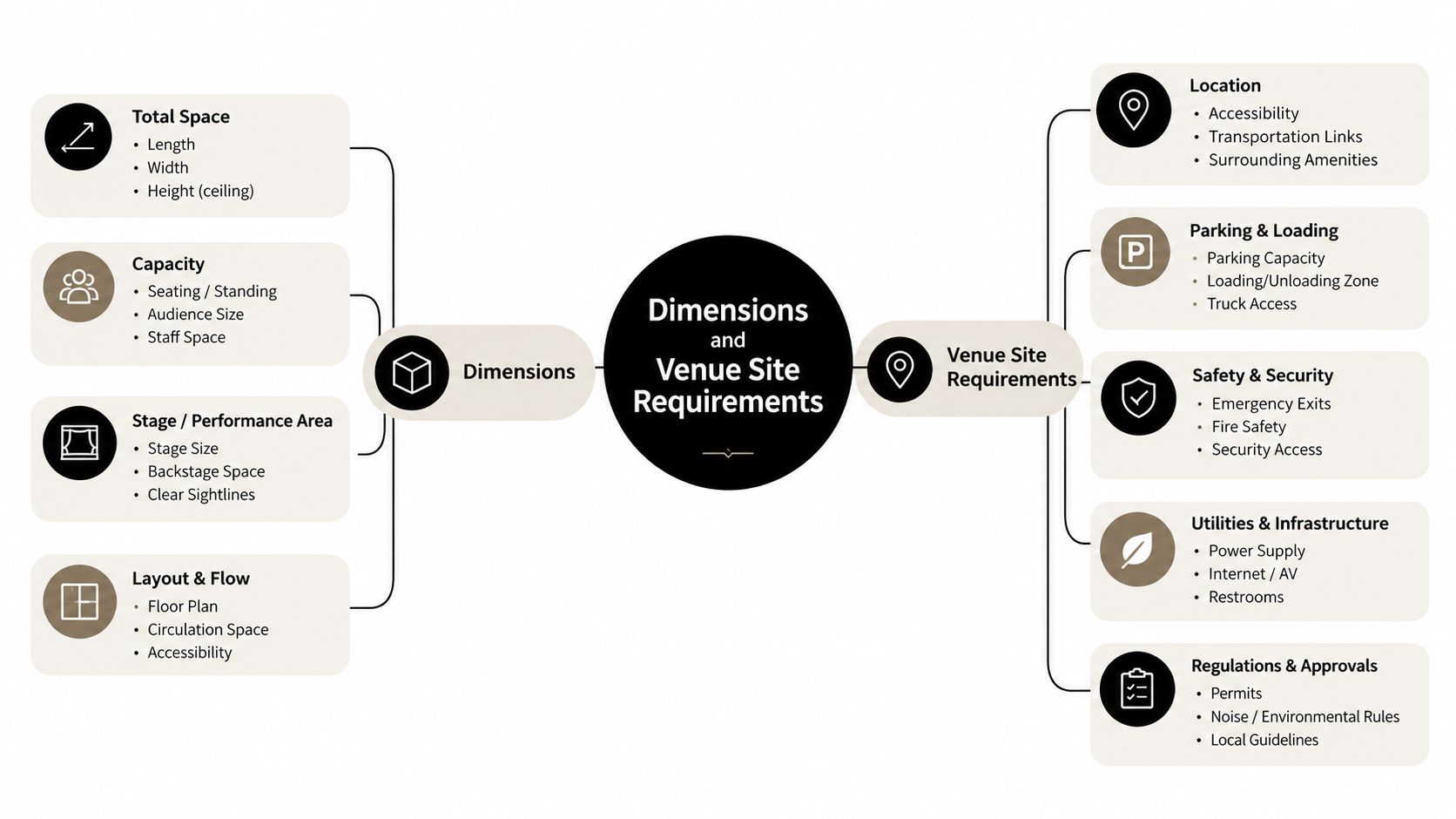
The base is only the equipment footprint. Players need approach space to inspect the rods and remove one without turning into another guest. Spectators need clear sightlines, while the queue must stay outside the active play area. If the attraction is pushed against a wall, table, fence, or neighboring activity, staff lose room to supervise and guests lose a safe route around it.
Build the site plan before delivery
Use this venue check before approving the booking:
- Reserve a level area: The published setup recommendation calls for a flat surface. Avoid slopes, soft ground, loose gravel, and flooring that rocks under pressure.
- Check vertical clearance: Another commercial listing describes a giant model standing almost 5 feet tall. Confirm the exact rental unit and measure indoor clearance, including fixtures, before finalizing the room plan.
- Protect circulation: Keep routes open for standing players, seated players, staff, and spectators. The game should not block an exit, restroom route, food line, or emergency access path.
- Review the floor plan visually: Venue photos, drawings, and interactive venue guides can reveal columns, low fixtures, narrow entrances, and changes in flooring before delivery.
- Confirm delivery access: Check doors, corridors, gates, and elevators from the loading point to the final position. Ask the rental operator whether the unit can pass through without being dismantled or relocated at the last minute.
The game works indoors or outdoors, but each setting needs a different inspection. Indoors, check ceiling fixtures, floor protection, door widths, and crowd density. Outdoors, reassess the ground after weather changes and avoid areas where rainwater collects. Keep the planned 6-by-6-foot operating area clear, then preserve additional surrounding space for approach, viewing, and queue movement.
For an outdoor program, compare the footprint with other giant-size yard games before assigning activity zones. Place KerPlunk where guests can see it easily, while keeping it away from fast-moving games, vehicle access, and high-traffic crossings. A short pre-delivery walkthrough can prevent a difficult move after the event has started.
Gameplay Mechanics and Reset Operations
The attraction's suspense comes from a load-transfer system. Dozens of balls rest on intersecting rods, and every removed rod changes the contact network, shifting load to neighboring rods, as described in the Hasbro Giant KerPlunk product information. The structure may look stable at the start, but a seemingly harmless withdrawal can remove a support that several balls depend on.
A typical oversized consumer set includes more than 30 sticks and more than 20 balls, with balls approximately 5 centimeters in diameter and sticks around 30 centimeters long. Larger event versions may use 30 balls and 24 rods, so planners shouldn't assume that every rental behaves exactly like the same household model. Verify the inventory and instructions for the specific unit.
Reset quality controls the next round
The reset isn't a quick visual tidy-up. It determines whether the next group faces a comparable starting arrangement. When the rod lattice becomes less dense, removing a rod is more likely to intersect a load-bearing contact, creating the familiar transition from careful play to a cascade.
Staff should use a repeatable procedure:
- Clear every fallen ball from the numbered trays and the surrounding floor.
- Return all rods before placing the balls, checking for missing, bent, cracked, or damaged components.
- Insert rods in multiple directions, rather than building parallel layers that leave oversized openings.
- Place the balls consistently, then inspect the chamber for visible gaps or an unusually weak starting section.
- Check the trays and perimeter so no ball remains underfoot and the next player can approach safely.
Practical rule: A reset is part of game operation, not downtime. Assign it to a named staff member instead of leaving it to the departing players.
The exact cascade pattern can't be predicted, which is part of the attraction. The starting support network can be controlled, however. Uneven ball placement or large gaps change how many rods carry the load, making one group's round easier or harder than another's. A consistent reset protects fairness and gives staff a dependable basis for managing the queue.
Designing Inclusive and Accessible Play
A carnival game isn't automatically inclusive just because guests can see it from a distance. Standard play assumes that a participant can stand at the structure, reach a rod, identify a suitable withdrawal point, tolerate the surrounding noise, and react comfortably when balls fall. Many guests won't meet all of those assumptions, and the solution isn't to exclude them from the activity.
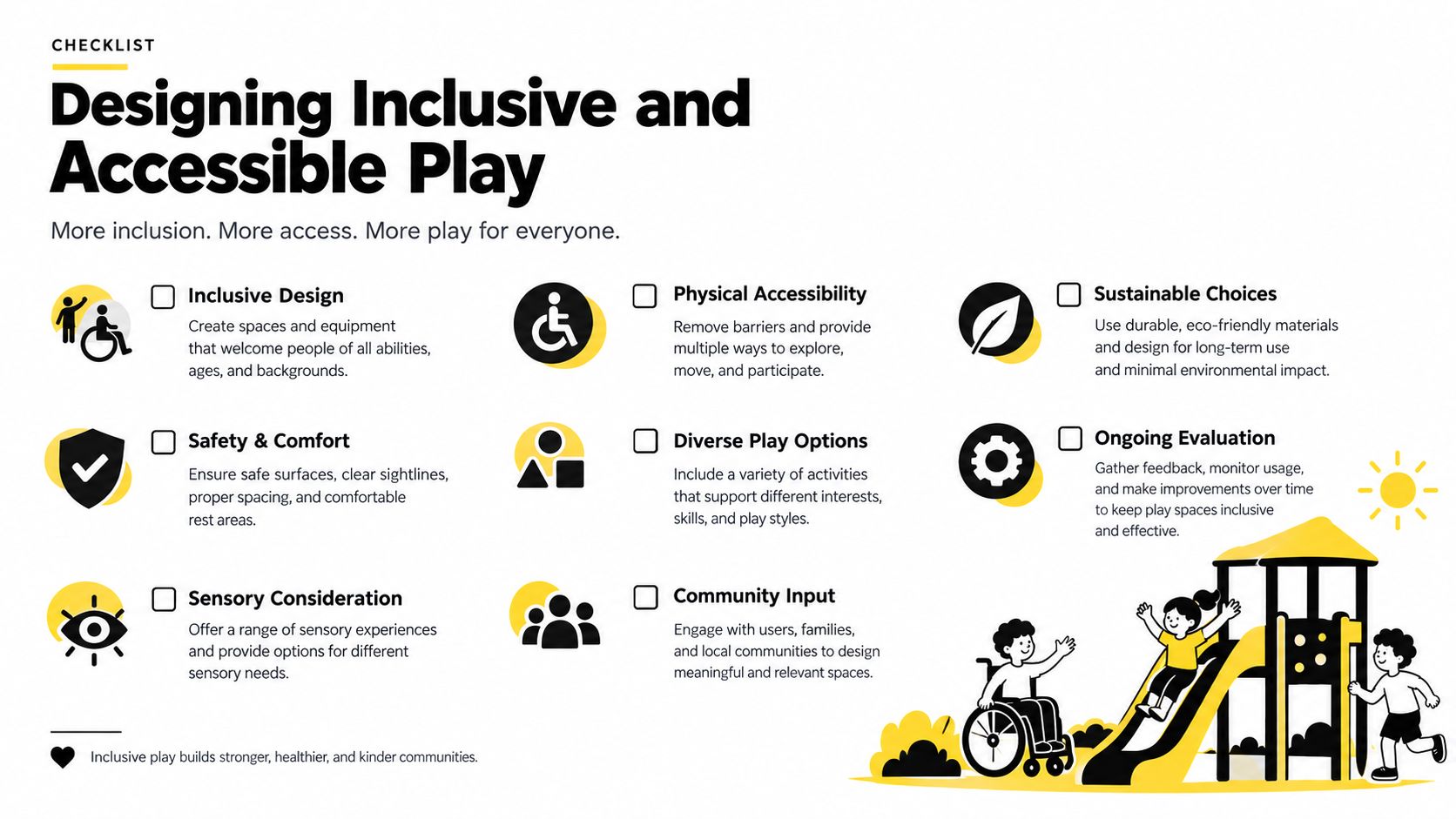
Begin with the physical approach. Keep the route to the game unobstructed, leave enough room for a wheelchair or mobility aid to turn, and let seated guests choose rods positioned at a comfortable height. Don't move a participant into an awkward reach just to preserve the usual rules. A staff member can identify accessible options without making the player explain a disability in front of a queue.
Offer more than one way to participate
A strong operating plan gives guests choices:
- Seated turns: Permit the participant to play from their chair, with the operator bringing attention to reachable rods without selecting the move for them.
- Assisted turns: A companion or trained staff member can steady a rod or complete the physical withdrawal after the player chooses it.
- Tactile guidance: Use verbal descriptions of rod locations and the chamber's layout for blind or low-vision guests. A participant may still choose strategically through clear orientation and staff support.
- Alternative roles: A guest who can't reach into the structure can serve as the caller, scorekeeper, strategist, or ball-count observer, provided the event treats that role as genuine participation rather than consolation.
- Short sessions: Let guests leave after a turn or play a brief format without pressure to complete a full round.
Recent event guidance predicts increased demand for neurodiverse-inclusive experiences and recommends varied formats, shorter interactive sessions, accessible locations, and sensory supports in its discussion of the evolution of live events. Put that advice into the run sheet. A quiet operating period, reduced announcements, a visible waiting-area boundary, and a nearby sensory-rest location can make the attraction easier to approach.
For staff: Explain the sound and the possibility of multiple balls dropping before the turn begins. Predictability gives guests control over whether they want to continue.
Don't rely on a generic “accessible” label from a rental provider. Ask how the unit will be approached, how staff handle assisted turns, and whether the venue can support low-stimulation play. Inclusion works best when it's designed into the schedule and layout before guests arrive.
Event Packages and Crowd Integration
Life-size KerPlunk fits best where guests can watch, make a quick decision, and leave without committing to a long activity block. That makes it a useful contrast to attractions that require harnesses, teams, changing areas, or extended instruction. It also means the game shouldn't carry an entire event's entertainment plan by itself.
For a corporate family day, place it near calmer skill games and social seating. Parents can watch children play while remaining close to the group, and adults can take a turn without changing clothes or learning complex controls. Pairing it with giant checkers, giant Connect Four, or another low-contact game creates a mixed-pace zone rather than a single queue that grows whenever one activity slows.
A school field day needs a different arrangement. Schedule the attraction near activities that can absorb a class or group while individual turns move forward. Keep younger participants away from the active rod area until a staff member calls them forward, and use a simple queue marker so students don't crowd the chamber. The visual outcome supports shared excitement, but the operator still needs to control hands, spacing, and turn order.
Match the attraction to the event rhythm
| Event setting | What the game contributes | What to pair with it |
|---|---|---|
| Corporate picnic | A nostalgic activity that supports informal conversation | Seated social games and family-friendly food areas |
| University orientation | A visible challenge that encourages friendly competition | High-energy attractions with separate queues |
| Community festival | A recognizable focal point with broad age appeal | Other carnival games and roaming entertainment |
| School field day | A structured, turn-based activity | Activities that handle larger groups at once |
The location should support discovery without creating a bottleneck. Put the attraction where guests can see the cascade, but avoid placing it at the narrowest point between major zones. Use a queue that runs along the edge of the activity area, not through the player's approach path.
Package decisions should also account for staffing. A visually simple attraction still needs someone to explain rules, supervise reach and spacing, reset the structure, and redirect the line. If the provider supplies an operator, confirm that the person is included in the schedule and knows the event's accessibility plan. If volunteers will run it, give them written rules and a reset method before guests arrive.
Securing Your Rental and Safety Standards
The safest booking is based on the exact unit, not a generic product name. Giant models vary in height, mass, rod count, ball count, and setup requirements, so ask the provider for the delivered equipment's specifications rather than planning from a stock photograph or a tabletop version.

Questions to resolve before signing
Ask the rental company to confirm:
- The equipment identity: What are the unit's height, base dimensions, recommended setup area, component counts, age guidance, and surface requirements?
- Inspection practice: How does the provider check rods, balls, trays, connectors, and the transparent chamber before delivery?
- Setup responsibility: Who assembles, levels, positions, and removes the attraction? Don't assume delivery means installation.
- Operating coverage: Is a trained attendant included, and who controls the queue, assisted turns, and reset process?
- Insurance documentation: Can the provider supply a certificate of insurance and venue-ready paperwork before the event deadline?
- Weather and relocation terms: What happens if outdoor conditions make the surface unsuitable or the attraction must move?
- Accessibility support: Can the team explain seated play, staff-assisted turns, sensory accommodations, and alternative participation roles?
- Emergency response: Where will the operator direct guests if a ball rolls into a walkway, a component fails, or the area needs to close?
A dedicated operator is preferable to unsupervised play at a crowded event. The attendant can keep hands away from the structure during another player's turn, prevent guests from leaning on the unit, remove loose balls from the floor, and stop play when the environment becomes unsafe. They can also apply the same rules to every group, which protects both fairness and crowd confidence.
Use this safety documentation guide when organizing paperwork for a school, campus, corporate venue, or municipal site. Keep the final equipment specifications, insurance certificate, contact details, site plan, accessibility arrangements, and weather decision in one event file.
Booking standard: If the provider can't answer who sets up, who supervises, how the unit is inspected, and what documentation the venue will receive, the rental isn't ready to approve.
Review the site with the provider before delivery, confirm the level operating area, and brief every staff member on the same rules. A well-managed life-size KerPlunk rental is more than a nostalgic prop. It's a controlled, visible activity that gives guests a reason to gather, participate, and cheer without forcing every person into the same style of play.
Phantom Entertainment provides turnkey event rentals across Pennsylvania and the Mid-Atlantic, including delivery, setup, professional operation, insurance documentation, and state-inspected attractions. Visit Phantom Entertainment to plan a life-size KerPlunk activity with the right footprint, staffing, accessibility support, and complementary entertainment for your event.
Ready to Book Your Event?
PA state-inspected, fully insured since 1979. Call us or get a free quote today.