
A typical 3-hour karaoke DJ booking lands around $450 on average, with most events falling between $300 and $800. That base number rarely tells the full story because equipment, travel, setup, hosting, and event requirements can change the final invoice substantially.
You may be looking at three quotes for what seems like the same karaoke night and wondering why they don't match. One vendor gives you a simple booking fee, another lists separate charges for screens and microphones, and a third includes a full production setup with an MC. The prices look inconsistent until you compare what each vendor is delivering.
The right question isn't only, “How much does a karaoke DJ cost?” Ask instead, “What does this quote include, and what will appear on the final invoice?”
Why Karaoke DJ Quotes Are Harder to Read Than They Look
A planner recently described the familiar problem: three vendors, the same event window, and three completely different proposals. The first quote looked inexpensive because it covered a DJ and basic sound. The second added lighting and extra microphones. The third included a host, larger speakers, multiple screens, and more involved setup.
All three vendors may be quoting accurately. They're selling different versions of karaoke.
An hourly rate is only the visible part of the purchase. The quote may also account for the number of singers, the size of the room, the distance to the venue, the amount of equipment required, and whether the DJ is expected to host the entire event. A karaoke DJ who only queues songs has a different workload from a professional who manages a singer queue, handles announcements, coordinates microphones, reads the room, and keeps the event moving.
Practical rule: Compare identical scopes, not just identical service hours.
The headline rate is rarely the full price
A low quote may exclude the second screen your room needs, the microphones for simultaneous singers, or the time required to load in and test the system. A higher quote may include those items from the start, which can make it more economical once you compare the finished package.
The marketplace data behind the common benchmark places a 3-hour karaoke DJ booking at about $450 on average, with a $300 low and an $800 high. That works out to an effective base rate of roughly $100 to $150 per hour before add-ons, although event length, travel, experience, and venue complexity still affect the actual proposal. GigSalad's karaoke DJ pricing benchmark provides the useful starting point, but it shouldn't replace a line-by-line quote.
Read the proposal like a production plan
Look for the following before comparing totals:
- Coverage hours: Confirm when the paid performance begins and ends.
- Equipment: Identify the speakers, microphones, screens, lighting, and stands included.
- Labor: Ask whether setup, teardown, hosting, and technical support are part of the fee.
- Travel: Check whether the vendor charges for distance, fuel, parking, or overnight travel.
- Contingencies: Clarify overtime, replacement equipment, cancellation terms, and venue requirements.
Once you separate those items, the price difference usually makes sense. The cheapest quote isn't automatically incomplete, and the most expensive isn't automatically padded. The scope tells you whether you're buying a basic karaoke appearance or a managed event production.
What a Typical Karaoke DJ Costs in 2026
Marketplace listings show karaoke DJ bookings ranging from about $140 to more than $1,050, with an average near $400. That spread is the useful starting point because it shows why a headline hourly rate rarely predicts the final invoice. GigHeaven's United States karaoke DJ listings reflect very different service levels, equipment packages, event demands, and travel requirements.
A separate pricing benchmark places a 3-hour karaoke DJ booking at about $450 on average, with a $300 low and an $800 high. Use that benchmark for initial planning, then request an itemized proposal. The published karaoke MC and DJ pricing data identifies travel, experience, event length, and venue complexity as factors that can change the final quote.
| Event type | Typical range | Average booking |
|---|---|---|
| Three-hour benchmark booking | $300 to $800 | About $450 |
| U.S. marketplace karaoke DJ listing | About $140 to more than $1,050 | Near $400 |
| Full-service package with sound, microphones, lighting, hosting, and setup | $800 to $1,200 | Varies by package |
Match the price to the service level
The lower end fits a simple room, modest technical needs, and a limited hosting role. Expect a compact sound system, basic singer rotation, song playback, and straightforward announcements. Confirm whether setup and breakdown are included before treating the quote as a bargain.
The middle range suits many private parties and organized gatherings. Packages at this level may include a stronger PA, more microphones, a larger lyrics display, and a host who manages the room rather than just operating the music. For planners who want dependable entertainment without a concert-style production, this is usually the practical target.
The upper end pays for a larger equipment stack and more hands-on labor. A full-service karaoke production can include several wireless microphones, larger speakers, lighting, multiple displays, complex cable runs, and an operator who stays involved throughout the event. The invoice rises because the vendor is supplying and managing more production, not because the DJ is merely performing for longer.
| Line item | What it can add |
|---|---|
| Equipment | Speakers, microphones, screens, lighting, and stands |
| Labor | Setup, teardown, hosting, and technical operation |
| Travel | Distance, fuel, parking, or overnight costs |
| Event demands | Announcements, timing, room coverage, and venue coordination |
Match the package to the event. A wedding, fundraiser, corporate event, or school program may require stronger sound coverage, safer cable management, tighter timing, and active coordination with venue staff. Request the package that covers those responsibilities, then remove extras you do not need.
The Cost Drivers That Move Your Quote Up or Down
Treat a karaoke quote like a build-your-own meal. The base booking covers the DJ's presence and a basic karaoke setup. Every additional requirement adds equipment, labor, transportation, or coordination.
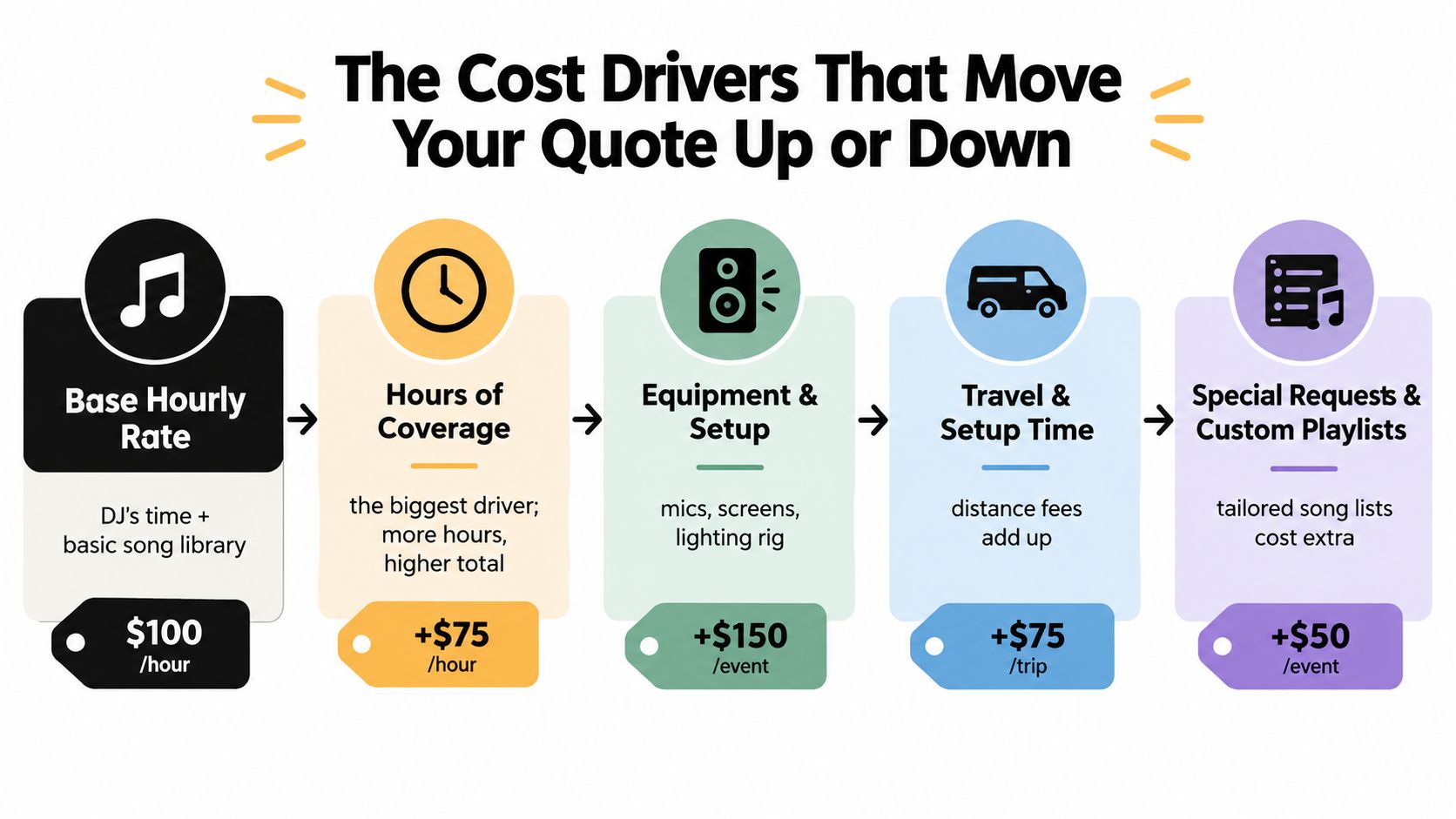
Hours and coverage
Start by defining the actual entertainment window. A short party with one performance area is easier to staff than an event where the DJ must remain available through dinner, announcements, contests, and a late dance set.
Ask whether the quoted hours cover only live karaoke or also include early arrival, soundcheck, room preparation, and teardown. Professional vendors may include some of that labor, while others itemize it. Either approach can be fair, but an unexplained setup charge is a budgeting problem.
Equipment and room demands
Microphones, lyric screens, speakers, subwoofers, lighting, and projection all affect the quote. A room that needs sound distributed across a large audience may require more than a compact system designed for a small party.
The same applies to singers. A host microphone, singer microphones, and a backup microphone create different equipment needs. Ask how many microphones are included and whether the vendor has a replacement plan if one fails.
If your ceremony or formal program needs wireless audio before karaoke begins, review practical guidance on Bluetooth tips for ceremonies so you can separate ceremony sound requirements from the karaoke package.
Travel, setup, and special requests
Distance can add a travel fee, particularly when the vendor must transport a larger system or make a long round trip. Parking, difficult loading access, stairs, and restricted venue delivery windows can also increase labor.
Custom playlists, themed song preparation, branded request forms, multiple screens, and a second technician should appear as named line items. If you need help evaluating the music side of the package, compare it with this guide to DJ karaoke music.
Ask the vendor to show the base service first, then list every optional upgrade separately. That format makes the quote much easier to approve or trim.
Real Package Examples by Event Size
A 30-person private party and a 225-guest corporate event can book the same number of performance hours and still require very different karaoke setups. Guest count affects singer queues, microphone handoffs, sound coverage, screen placement, and the host's workload. Those changes often matter more than the hourly rate printed at the top of the quote.
A small gathering may need one display and a compact PA. A larger event may need multiple viewing points, additional microphones, stronger coverage, and a host who can keep requests moving without disrupting the rest of the program. The system becomes more distributed and more carefully managed as attendance rises.
Small-room booking
For a modest private gathering, request one host, portable sound, a practical microphone setup, and a single lyrics display. Skip lighting unless the room really needs it. The proposal should state who supplies the display, manages song requests, and handles setup.
Compare a basic host-led karaoke package with another package built around the same format. A lower headline price may reflect fewer microphones, less sound coverage, or no display equipment. Compare matching inclusions before deciding which quote costs less.
Mid-size event
A corporate gathering or community event may need wider sound coverage, more than one display, extra microphones, and a host who can manage transitions between karaoke and other activities. Branded instructions, a defined request process, or coordination with an event manager can add labor even when the karaoke hours remain unchanged.
The following package examples and prices come from NoCo Party's karaoke service listings:
| Package | Guests | Hours | Equipment | Price range |
|---|---|---|---|---|
| Compact package | Up to 50 | 3 hours | Basic karaoke sound and host service | $495 example |
| Larger crowd package | 225 or more | 3 hours | Dedicated MC and concert-style lighting | $1,195 example |
| Deluxe package | Not specified | 4 hours | Illuminated DJ booth and expanded production | Starts at $675 |
| Tabletop package | Not specified | 2 hours | Tabletop karaoke format | Starts at $425 |
The examples show why duration does not determine the final invoice on its own. A four-hour deluxe package starts at $675, while a two-hour tabletop package starts at $425. The difference comes from format, production equipment, guest capacity, and host responsibilities. Treat each item as a separate cost driver when reviewing the quote.
Ask the vendor to price the base service first, then list upgrades for displays, microphones, lighting, staffing, and production separately. That format makes it easier to remove extras without weakening the core karaoke service.
Budgeting insight: A larger guest list usually changes the production design, not just the number of chairs in the room.
How Location and Market Size Shape Your Bottom Line
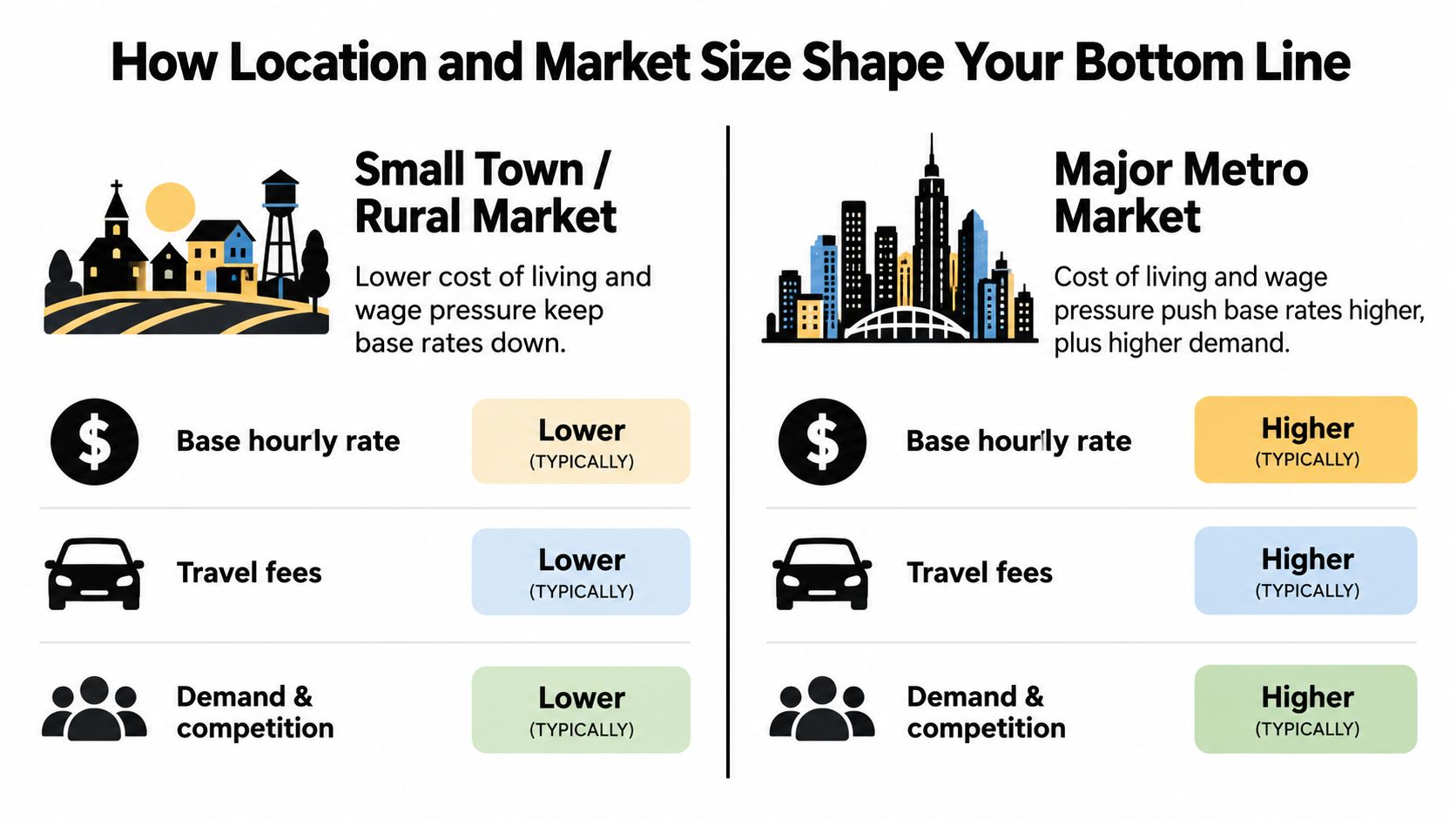
A karaoke DJ quoted at one hourly rate can produce very different invoices in different cities. Local labor costs, demand, venue access, parking, and travel all affect the final total. Read the quote as a line-item breakdown, not a single number.
Market size sets the starting point. Large metropolitan areas often carry higher labor, parking, loading, and coordination costs. Smaller markets may have fewer providers but lower operating expenses. A lower rate does not automatically mean weaker service, and a higher rate does not guarantee better production.
Location affects more than the base rate
Travel needs its own line. A vendor may include transportation for a nearby booking, while an out-of-area provider bills mileage, fuel, parking, tolls, or travel time separately. A 15-mile booking may fit within a local service area. A 90-mile booking can require a separate travel fee, an earlier departure, and more time before and after the performance. Ask whether the charge is flat or calculated from the actual route.
Confirm the load-in conditions before comparing proposals. A vendor facing hotel freight elevators, restricted parking, stairs, or a long walk from the vehicle may need more labor than a provider unloading directly beside a private venue.
Venue rules can change the proposal
Hotels, schools, campuses, municipal facilities, and corporate venues may require insurance documents, approved loading procedures, cable protection, or advance coordination. Those requirements consume time and may add equipment that a vendor would not bring to a backyard party.
Seasonal demand can also make a date harder to book and increase its value. Ask which part of the quote reflects the date, venue access, travel distance, or production requirements.
Use three comparable local proposals as your benchmark. Give each vendor the same hours, guest count, equipment list, travel details, and hosting duties. A citywide average provides context, but scope-matched bids show what your event will actually cost.
Budgeting Smart and Asking the Right Questions
Start with the total event, then assign entertainment a deliberate place in the budget. Don't wait for the vendor to define what you can afford. Decide whether karaoke is the main attraction, a short program segment, or one part of a broader entertainment plan.
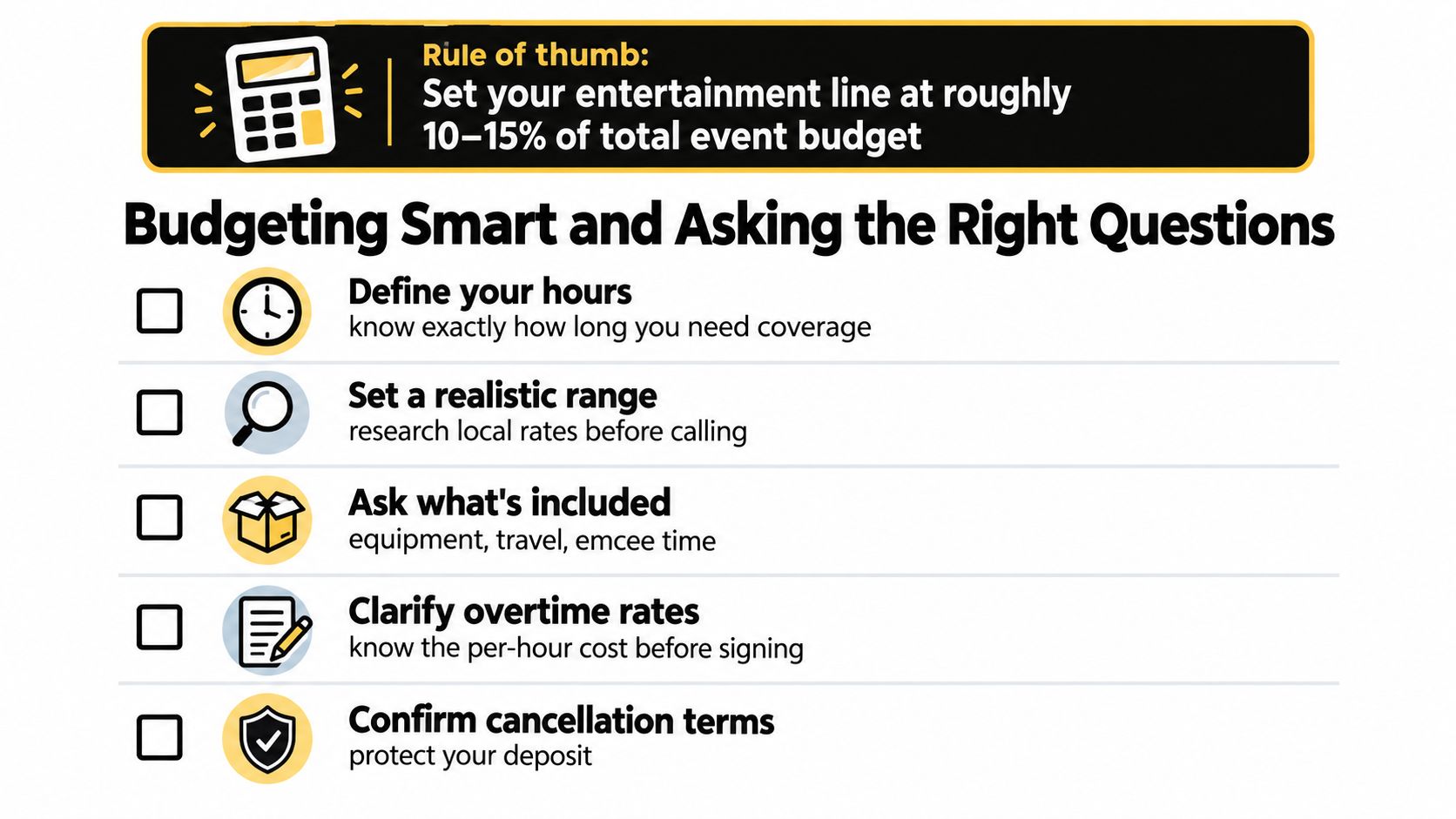
Send every vendor the same event brief. Include the venue, date, guest count, room layout, performance hours, expected announcements, parking conditions, and whether karaoke must share the room with dinner, dancing, or another program.
Questions that belong in every quote request
- Hours included: What time does the service begin and end, and is setup included?
- Equipment supplied: How many speakers, screens, microphones, stands, and lights arrive?
- Hosting duties: Does the DJ manage the singer queue, make announcements, and coordinate transitions?
- Travel charges: Are mileage, parking, tolls, or difficult load-in conditions billed separately?
- Overtime terms: What happens if the event runs late, and how is the additional time priced?
- Contract protection: What deposit, cancellation, postponement, refund, and replacement provisions apply?
- Venue documentation: Can the provider supply insurance documentation if the venue requires it?
A written proposal should make the final invoice predictable. Vague labels such as “service fee,” “admin charge,” or “production support” deserve an explanation before you approve the booking. If your organization needs event insurance guidance alongside entertainment planning, this resource on DJ event insurance can help frame the conversation with the venue.
Red flags deserve a direct response
Be cautious when a quote is dramatically below comparable proposals and the vendor won't identify the equipment or labor included. Be equally cautious when the proposal demands full payment upfront, provides no written contract, or refuses to confirm insurance when the venue asks for it.
Negotiation works best when you change the scope instead of just demanding a lower price. Ask about a weekday, an off-peak date, bundled coverage, fewer lighting elements, or a package that combines setup with another service already traveling to the venue.
Putting It All Together for Your Event
A standard three-hour karaoke booking in a mid-sized market should be evaluated against the $450 benchmark, then adjusted for the actual production requirements. Use that number as an anchor, not as a final quote.
First, define the event tier. A small private party with one room and basic sound needs a different package from a large reception with multiple viewing points and active MC duties. Confirm the guest count, service hours, room layout, and whether the DJ must provide more than karaoke playback.
Second, add only the drivers your event needs. Travel, additional microphones, extra displays, lighting, larger sound coverage, custom requests, and a second technician all have a reason to appear in the proposal. If the vendor lists an upgrade you don't need, remove it before comparing the revised total with another bid.
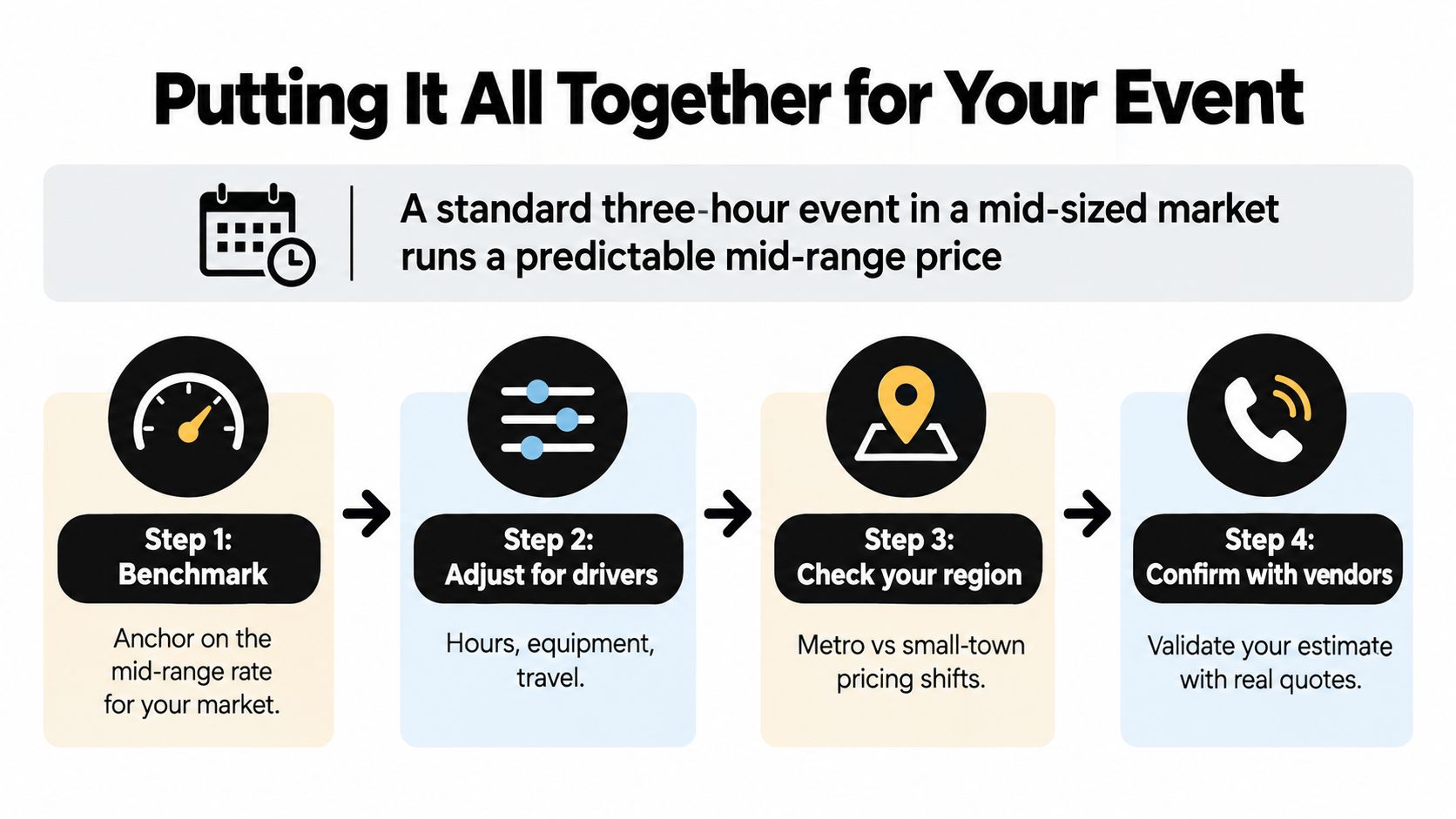
Third, check the local market. The verified marketplace examples show that average pricing can differ materially between cities, so compare your revised estimate with vendors who regularly work in your area. If a quote is far below comparable proposals, inspect the equipment, hosting coverage, insurance, and contract before celebrating the apparent savings.
Finally, use a consistent brief when you request proposals. A practical DJ event planner guide can help organize the event details that affect staffing, timing, and production. The strongest quote isn't necessarily the lowest one. It's the proposal that states exactly what arrives, who operates it, when the service starts, and what you owe if the event changes.
For planners who want karaoke handled as part of a broader event setup, Phantom Entertainment offers karaoke and DJ services alongside rentals and turnkey entertainment support for schools, corporate events, family fun days, parties, and community programs. Visit Phantom Entertainment with your date, venue, guest count, and equipment needs to request a package that matches your event instead of paying for an unclear headline rate.
Ready to Book Your Event?
PA state-inspected, fully insured since 1979. Call us or get a free quote today.