
You arrive at the venue with your speakers, controller, lights, and cables packed neatly in the van. The room is ready, the client is waiting, and then someone at the door asks for your certificate of insurance, or COI. You don't have it, or the certificate doesn't name the venue correctly, and your setup stops before it starts.
This situation is common for mobile DJs working at corporate venues, schools, universities, private clubs, and community facilities. DJ event insurance isn't just paperwork for large festivals. It's part of the booking process, and the wrong policy can leave you without access to the room, without protection for your equipment, or exposed to a claim after a guest gets hurt.
Why Every DJ Needs Event Insurance Before Load-In
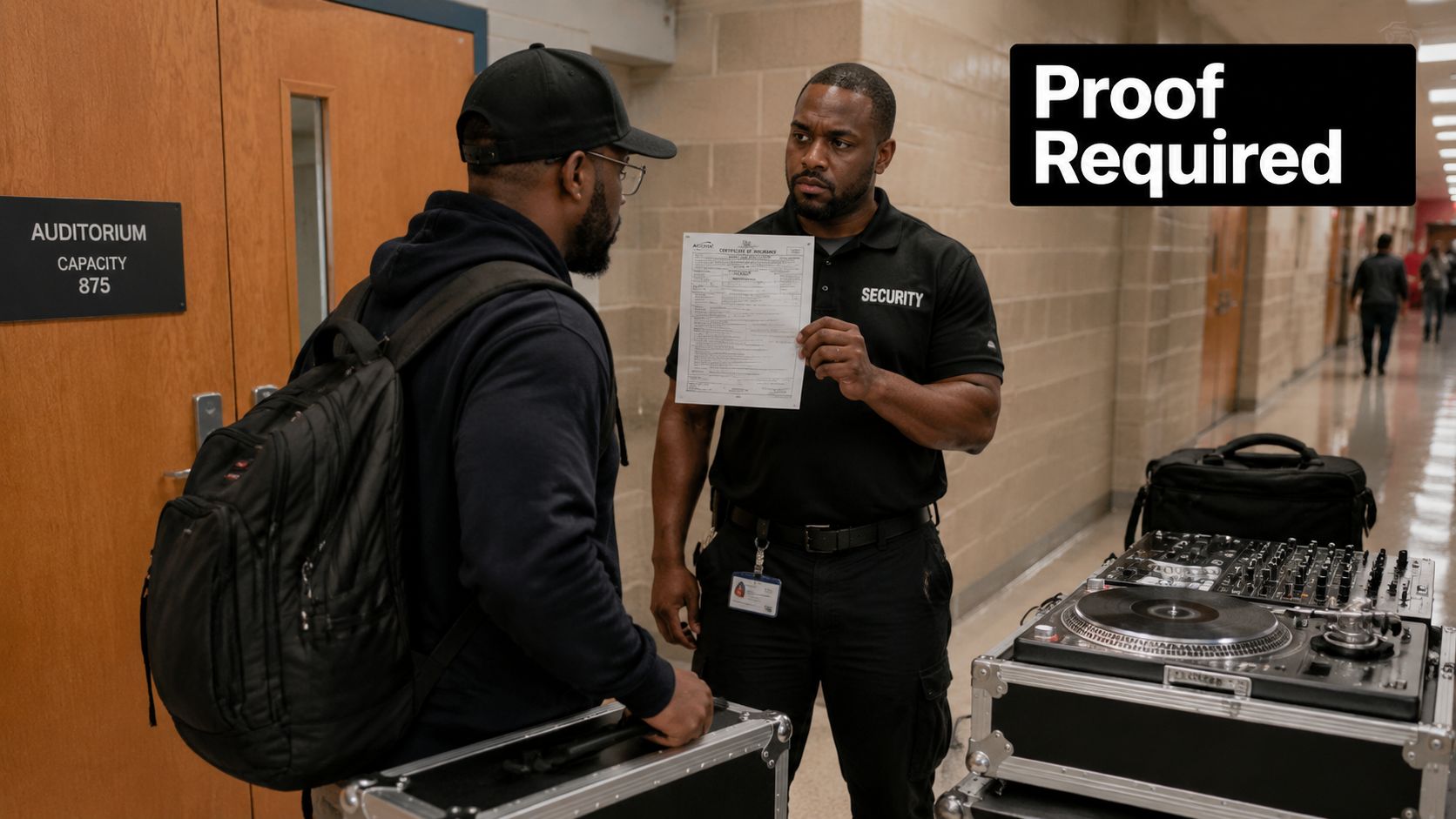
The security desk stops you before you reach the ballroom. Your speakers, controller, stands, cables, and lights are ready, but the venue requests a certificate of insurance, or COI. The certificate lists the wrong entity, uses the wrong event dates, or omits the required wording. Your setup is now an administrative problem, not a music problem.
Venue managers make this check because every outside vendor adds equipment, electrical connections, staff, and guest-contact risks to the property. Crowded dance floors, drinks, dim rooms, and hurried load-ins leave little room for careless placement.
A cable across a walkway can lead to a bodily injury claim. A speaker stand can hit a wall, floor, or guest. A rolling case can damage a doorway or finished surface. General liability insurance is designed for third-party bodily injury and property damage, which explains why venues commonly request proof of it. Coverage guidance on DJ insurance requirements and coverage structure also distinguishes liability protection from equipment coverage.
The venue is protecting more than its building
A lawsuit can name the venue even when your equipment caused the immediate problem. The property owner, event host, and DJ may all become part of one claim. Requiring vendor insurance places responsibility closer to the business controlling the equipment and setup area.
The venue's policy does not replace yours. Its coverage serves the venue's interests, not your business, legal defense, or duties under the vendor agreement. The contract may also require the venue to appear as an additional insured. That wording must be handled by the insurer, not improvised on the certificate.
Practical rule: Treat the COI request as part of the booking, not as paperwork to chase on event day.
Insurance also affects which bookings you can accept. Corporate planners, schools, and university event offices may need a compliance file before approving a vendor. If you cannot provide the requested certificate, the planner can select another performer, delay payment, or cancel the engagement.
Load-in is where weak preparation becomes expensive
The most avoidable failure occurs before the first song. A DJ arrives with incorrect event dates, inadequate limits, or the wrong certificate holder. The venue rejects the document, and the DJ must leave or solve an insurance issue while staff prepare the room.
Ask for the venue's exact insurance wording as soon as the contract is discussed. Send it to the insurer, confirm the certificate holder and any additional-insured requirement, then verify the completed COI before loading the vehicle. Keep a ready-to-send compliance file with the policy and certificate. For DJs building repeatable operations, resources for professional disc jockey services can also clarify the standards clients commonly expect from an event vendor.
Core Coverage Types Every DJ Policy Should Include
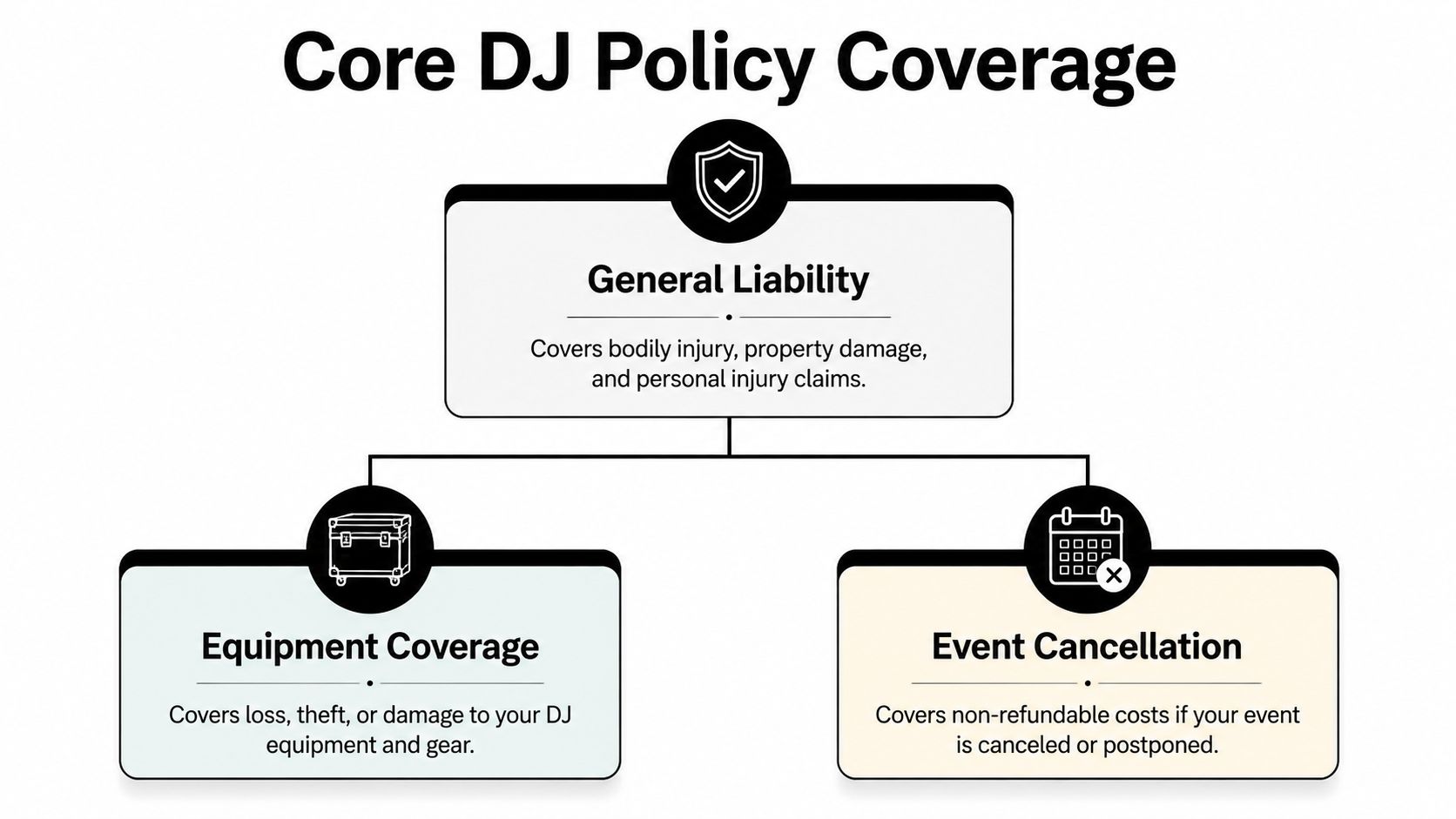
Start with the distinction that prevents most coverage mistakes: liability coverage protects you against claims by other people, while equipment coverage protects property you own, rent, borrow, or use for business, subject to the policy terms. Those are different risks, and one doesn't automatically replace the other.
General liability is the venue-facing foundation
General liability typically responds to third-party bodily injury and third-party property damage. A guest who trips over your cable, a speaker that damages a venue wall, or a lighting stand that scratches a floor can create a claim against your business. The policy may also provide investigation and legal defense, depending on the terms, exclusions, and limits.
This is the coverage most venues are trying to verify with a COI. It demonstrates that you have a commercial policy intended to respond to incidents connected with your DJ work. It doesn't mean every claim will be paid, and it doesn't eliminate the need for safe setup practices.
Professional liability addresses service allegations
Professional liability is different. It generally addresses alleged errors, omissions, or service failures, such as a client claiming that the DJ failed to deliver the contracted performance or provided inadequate service. A cable trip is a physical-accident risk. An allegation that you failed to perform the agreed service is a professional-liability issue.
The distinction matters because a DJ can carry equipment coverage and still lack meaningful protection against a claim about nonperformance. DJ insurance coverage guidance from Thimble separates general liability, which addresses injury and property damage claims, from professional liability, which addresses alleged service failures.
Equipment coverage protects the tools that generate your income
Standard liability policies generally don't protect your own speakers, controllers, mixers, lights, laptops, cases, or cables. Equipment protection must usually be purchased separately. Ask whether the policy covers gear while it is stored, transported, loaded, set up, and operating at the venue. Also check whether rented or borrowed equipment is included, because many DJs supplement their inventory for larger bookings.
Event cancellation coverage is another option, but it serves a different purpose. It may address certain covered losses connected with cancellation or postponement, subject to the policy's terms and exclusions. Don't confuse it with liability coverage. Cancellation insurance won't replace the general liability protection a venue requests for physical injury or property damage.
If alcohol is served, ask whether liquor liability or an appropriate endorsement is needed. The answer depends on who supplies, sells, serves, or controls the alcohol and on the venue's contract. Don't assume that pressing play makes alcohol-related exposure someone else's problem. Have the insurer review the event arrangement before you bind coverage.
Understanding Venue Requirements and Rising Liability Costs
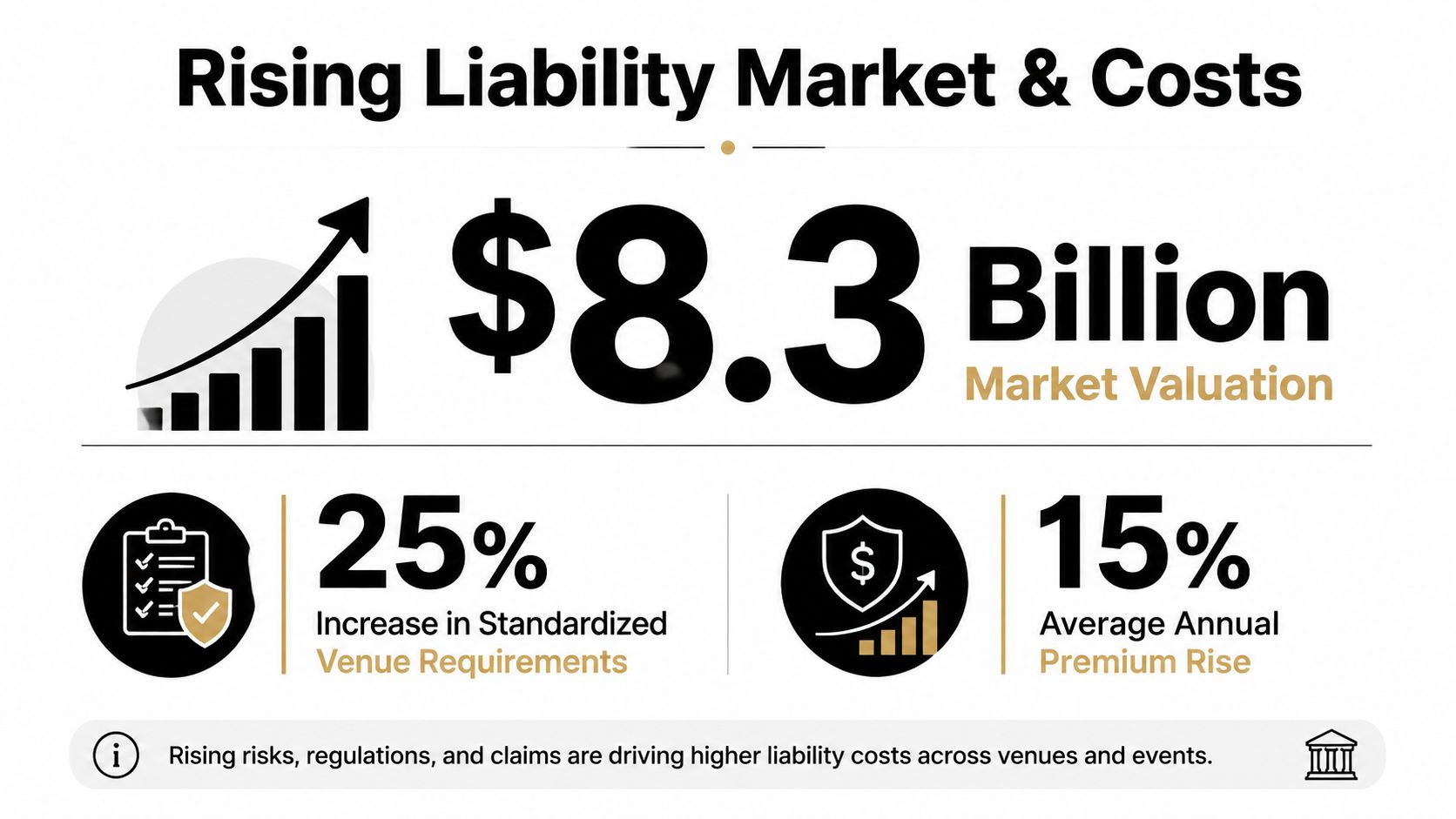
Venue requirements have become more standardized because event operators want predictable documentation from every outside vendor. In the broader event-liability market, the market was valued at $8.3 billion in 2025 and is projected to reach $14.2 billion by 2034, representing 7.2% annual growth, according to event liability insurance market analysis. DJ coverage is only one part of that market, but the direction is clear. Venues are operating inside a larger insurance environment where claims, documentation, and vendor accountability receive close attention.
General liability represented 38.5% of the event-liability market in 2025, or about $3.2 billion, making it the largest coverage category in that market, according to the same analysis. That helps explain why venue administrators focus first on liability limits and certificate wording instead of asking whether a DJ has protected personal equipment.
Why North American venues are strict
North America accounted for 40.2% of event-liability insurance revenue share, indicating that established venue-insurance and COI practices are concentrated in major U.S. and Canadian markets, as reported in the market analysis above. In practical terms, DJs working with schools, universities, corporate campuses, and municipal facilities in these markets should expect a formal compliance process rather than a casual verbal promise.
Industry guidance commonly cites $1 million per occurrence and $2 million aggregate as the expected minimum for event-facing DJs. The first limit concerns a covered occurrence. The aggregate limit concerns the policy's total limit for covered claims during the policy period, subject to the contract. A venue may ask for different limits, so treat the venue's written requirement as controlling.
UK venues may specify public liability limits up to £5 million, according to event DJ insurance coverage guidance from Insurance Canopy. Don't copy a U.S. certificate format into a UK booking or assume a familiar limit will satisfy a foreign venue.
Rising claim severity changes the conversation
Independent reporting estimates that average event liability claims in North America increased from $425,000 in 2020 to about $680,000 in 2025, a 60% increase, according to the market source cited above. That data doesn't mean a small DJ booking will produce a claim of that size. It does show why venues don't want to rely on informal assurances when a vendor's equipment enters a public space.
The practical recommendation is straightforward: meet the venue's required limit, verify the aggregate, and don't reduce coverage to save a small premium. A rejected COI can cost you the booking. An uncovered claim can cost far more.
Short-Term Event Policies Versus Annual Coverage
At load-in, a venue manager may ask for a current certificate before allowing your speakers, lights, or assistants through the door. The policy duration must cover the entire work window, and the COI must match the venue's requested wording. Choose coverage based on your booking schedule and how often you can repeat that administrative process.
Short-term event policies suit one-day or multi-day shows. Annual coverage starts at $18.50 per month, while event pricing varies by provider and booking details. Treat any advertised price as a starting point, not a guarantee. Your location, limits, endorsements, business details, and insurer affect the quote. For a practical comparison, review DJ insurance pricing and policy-duration guidance before you buy.
| Feature | Short-Term Event Policy | Annual Policy |
|---|---|---|
| Best fit | Occasional weddings, parties, or single bookings | DJs performing regularly throughout the year |
| Coverage window | A defined one-day or multi-day event period | Ongoing policy period, subject to policy terms |
| Administrative work | New application or event purchase for each engagement | One policy can support repeated bookings |
| COI handling | Certificate tied to the covered event and requested parties | Certificates issued for qualifying venues and events |
| Main advantage | Avoids paying for ongoing coverage when you rarely perform | Reduces repeated procurement and supports consistent booking |
| Main risk | Forgetting to cover setup, teardown, or a newly added date | Paying for broader duration than your actual business needs |
Choose short-term coverage when your calendar is sparse
A DJ with only a few bookings each year can use short-term coverage efficiently. Set the insured period around the full job, not only the guest-facing performance. Confirm that setup, teardown, rehearsal, load-in, and load-out are included. If the event date changes, contact the insurer before arriving at the venue.
Check the certificate before you leave for the booking. A venue may require an additional insured, a specific certificate holder, or particular wording. Buying a policy does not guarantee that its COI satisfies those conditions. Ask for corrections early enough to receive an accepted document.
Annual coverage makes sense for an active operator
Annual coverage fits DJs handling recurring weddings, school events, corporate functions, or seasonal work. One policy reduces repeated applications and lets you respond faster when a planner requests proof. It also keeps coverage active between bookings, subject to the policy terms and exclusions.
Apply the same discipline you use when evaluating DJ service pricing. Compare limits, exclusions, endorsements, covered operations, and the certificate process instead of choosing on premium alone. For household budgeting unrelated to commercial DJ liability, budget renters coverage with Mai & Associates may offer useful context. Renters insurance does not replace business coverage for DJ work.
How to Obtain a Policy and Certificate of Insurance
A COI should be the final output of a deliberate process, not a screenshot pulled together while you're unloading speakers. Start by asking the venue or planner for its insurance requirements in writing. Get the exact legal name and address of the certificate holder, the requested limits, any additional-insured language, and the dates the venue wants covered.
Gather the event details first
Prepare the information an insurer will need:
- Event dates: Include setup and teardown if the policy treats those activities separately.
- Venue information: Use the venue's legal name and complete address exactly as provided.
- Event profile: Describe the type of event and the DJ services you'll perform.
- Operational details: Note whether you'll use assistants, subcontractors, fog effects, outdoor equipment, or rented gear.
- Coverage requirements: Record the requested per-occurrence and aggregate limits, endorsements, and certificate instructions.
Give the insurer the venue's own wording instead of paraphrasing it. A small difference in the certificate holder's name can cause an administrator to reject the document.
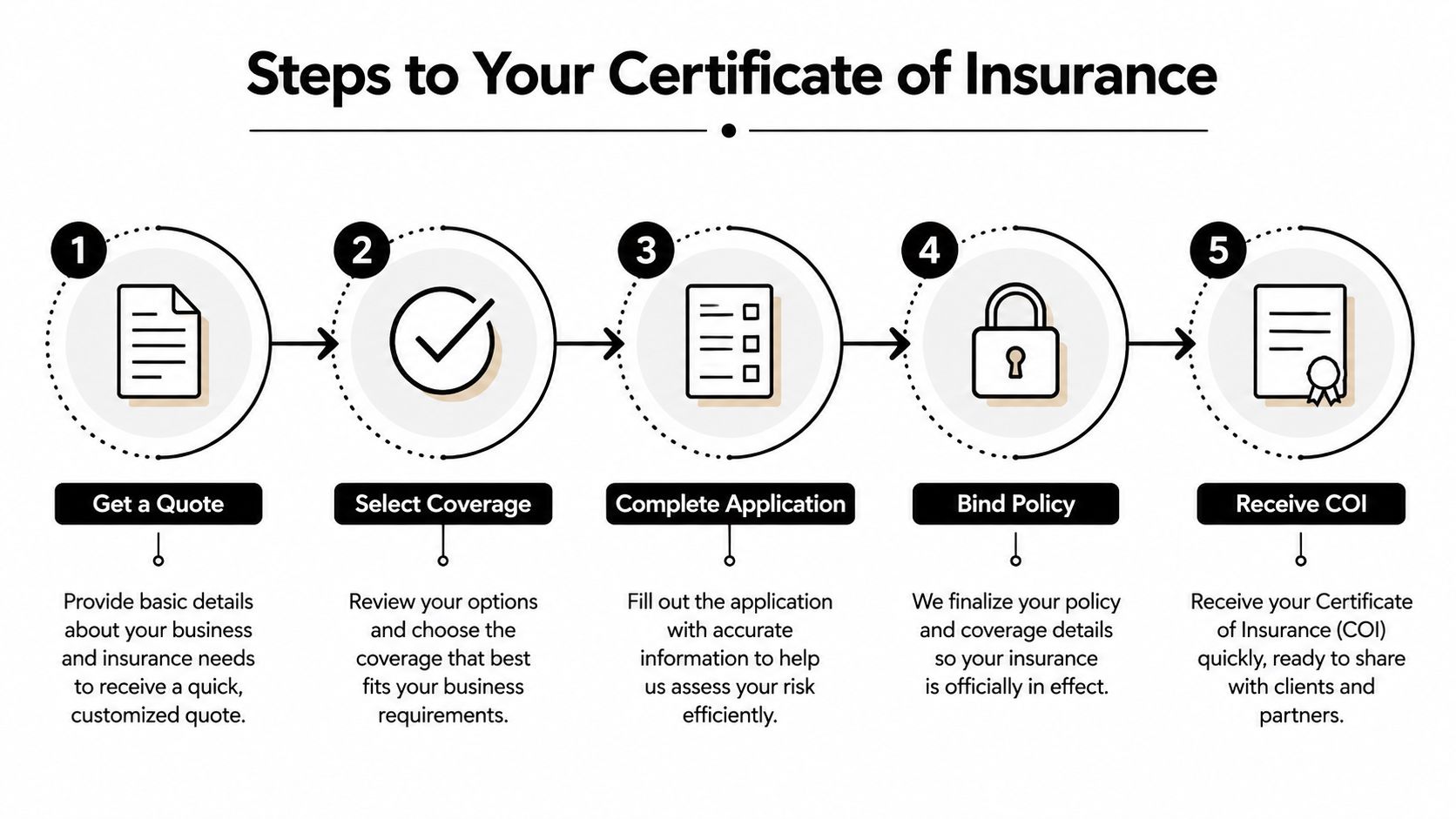
Bind coverage, then inspect the certificate
After comparing quotes, select the policy that fits the job. Confirm that general liability applies to DJ operations, then add separate equipment protection if you need coverage for your own gear. If the event includes alcohol or unusual production elements, ask about endorsements before purchase.
A COI generally summarizes the insured party, insurer, policy type, policy dates, limits, and certificate holder. It isn't the full policy and doesn't change the policy's terms. Read it line by line after issuance.
Check these fields before sending it:
- Named insured: Your legal business name should match the policy and contract.
- Policy dates: The event and related access period should fall within the active window.
- Limits: The figures should meet the venue's written requirement.
- Certificate holder: The venue or organization should appear by its correct legal name and address.
- Additional insured status: If required, confirm that the endorsement or wording is included, not merely requested.
- Description of operations: Make sure the event description accurately identifies the DJ engagement.
Send the COI to the venue well before load-in. If a booking is last-minute, call the insurer and venue administrator immediately. Ask the insurer how quickly it can issue revised documentation, and ask the venue whether electronic delivery is acceptable. Never assume that payment alone means the venue has received an acceptable certificate.
Pre-Event Compliance Checklist for DJs and Planners
A DJ can arrive with valid insurance and still be stopped at load-in. Venue staff check the certificate against the contract, so treat compliance as part of event preparation, not paperwork to handle at the last minute. Requirements may change with the event type, property owner, attendance plan, alcohol arrangements, or contracting entity.
Before accepting the engagement
- Request written requirements: Ask the planner or venue for liability limits, certificate-holder details, additional-insured wording, and submission deadlines.
- Confirm the venue identity: Copy the legal name and address exactly. A shortened public name can make the COI unacceptable.
- Review the event scope: Identify outdoor areas, school campuses, corporate grounds, assistants, subcontractors, rented gear, and special effects.
- Choose the policy duration: Include setup, event access, and teardown in short-term coverage. Use annual coverage when your schedule makes repeated applications inefficient.
Before sending the COI
- Verify liability limits: Match the venue's written requirement. Event-facing DJ policies commonly reference $1 million per occurrence and $2 million aggregate as expected limits. Confirm the figures with the venue and your insurer, rather than assuming a standard applies.
- Check the named insured: Your legal business name must match the policy and contract.
- Check the certificate holder: Enter the venue's complete legal name and address.
- Confirm endorsements: Add equipment, professional liability, liquor liability, or other coverage when the event or contract requires it. A request for an endorsement is not proof that it has been issued.
- Match the dates: Include every period when you will access the property, including setup and teardown.
Send the COI before load-in, with enough time for corrections. Keep the insurer's contact details available, and ask whether electronic delivery meets the venue's process.
On event day
- Carry the COI: Keep a digital copy on your phone and a downloadable copy in your business records.
- Bring policy contact details: Venue staff may need quick verification.
- Control the setup area: Route cables away from walkways, secure stands, protect floors, and keep drinks away from electronics.
- Document the handoff: If staff inspect the setup, record their instructions and remove hazards before guests enter.
A professional planner should answer compliance questions without searching through email threads. For common service and event-planning questions, review the DJ and event FAQ, then maintain a venue-specific checklist tied to each contract.
Common Insurance Mistakes That Leave DJs Exposed
The first mistake is assuming the venue's insurance covers you. It generally protects the venue's interests, not your business, equipment, or legal obligations. If you're named in a claim, you need to know which policy responds to your conduct as the vendor.
The second mistake is buying equipment coverage and calling the job insured. Equipment coverage may protect your speakers, controller, laptop, or lights, but it doesn't replace general liability. A guest injury or allegation that you damaged the venue involves a third-party claim, not just loss of your own gear. Comparing liability coverage options can help you identify the difference between protecting business property and protecting against claims from others.
Other gaps worth correcting
- Using a personal policy: Homeowners insurance and personal umbrella policies may exclude commercial DJ activity. Ask the insurer directly instead of assuming personal coverage follows you to a paid event.
- Choosing low limits: A certificate below the venue's requirement can be rejected before you perform. Match the written requirement first, then consider whether your business needs more.
- Ignoring professional liability: General liability doesn't automatically address alleged service failures. Add professional liability when your contracts create meaningful performance obligations.
- Forgetting setup and teardown: A policy that starts when guests arrive may not protect an incident during load-in or pack-out.
- Misreading the COI: A certificate summarizes coverage, but it doesn't expand the policy. Confirm endorsements and additional-insured status through the insurer.
- Skipping equipment review: List or document your gear and ask how storage, transportation, rental, borrowing, theft, and accidental damage are handled.
Your goal isn't to buy the cheapest document that gets attached to an email. Your goal is to carry coverage that satisfies the venue and reflects the way you work.
Phantom Entertainment provides insured, venue-ready event services with certificates of insurance and safety documentation for schools, corporate events, universities, community festivals, and private celebrations. Visit Phantom Entertainment to discuss a turnkey event package and get practical planning support before load-in.
Ready to Book Your Event?
PA state-inspected, fully insured since 1979. Call us or get a free quote today.