
Choosing an arcade game for an event can feel straightforward until you picture the room: guests of different ages arrive at different times, some want a quick turn, and others gather around to watch a match. The best choice isn't automatically the most famous cabinet. It's the game that suits the crowd, fits the venue, and keeps play moving without demanding more staff support than you can provide.
These eight arcade games examples each serve a different event role, from quick reaction play to head-to-head competition and family-friendly skill games. Classic arcade attractions became social, repeat-play entertainment because guests could understand the controls quickly and take short turns. That history is part of why familiar titles can work so well at family fun days, school events, corporate gatherings, and community festivals. (Background on the arcade boom and shared play)
For planners, the practical details matter as much as the title. Consider whether guests can play seated or standing, whether a game relies on sound or flashing visuals, how much clearance its controls require, and whether people waiting can comfortably watch. Accessibility research treats these as meaningful parts of the arcade experience, not afterthoughts. (OURCADE research on identifying arcade accessibility needs)
1. Pong
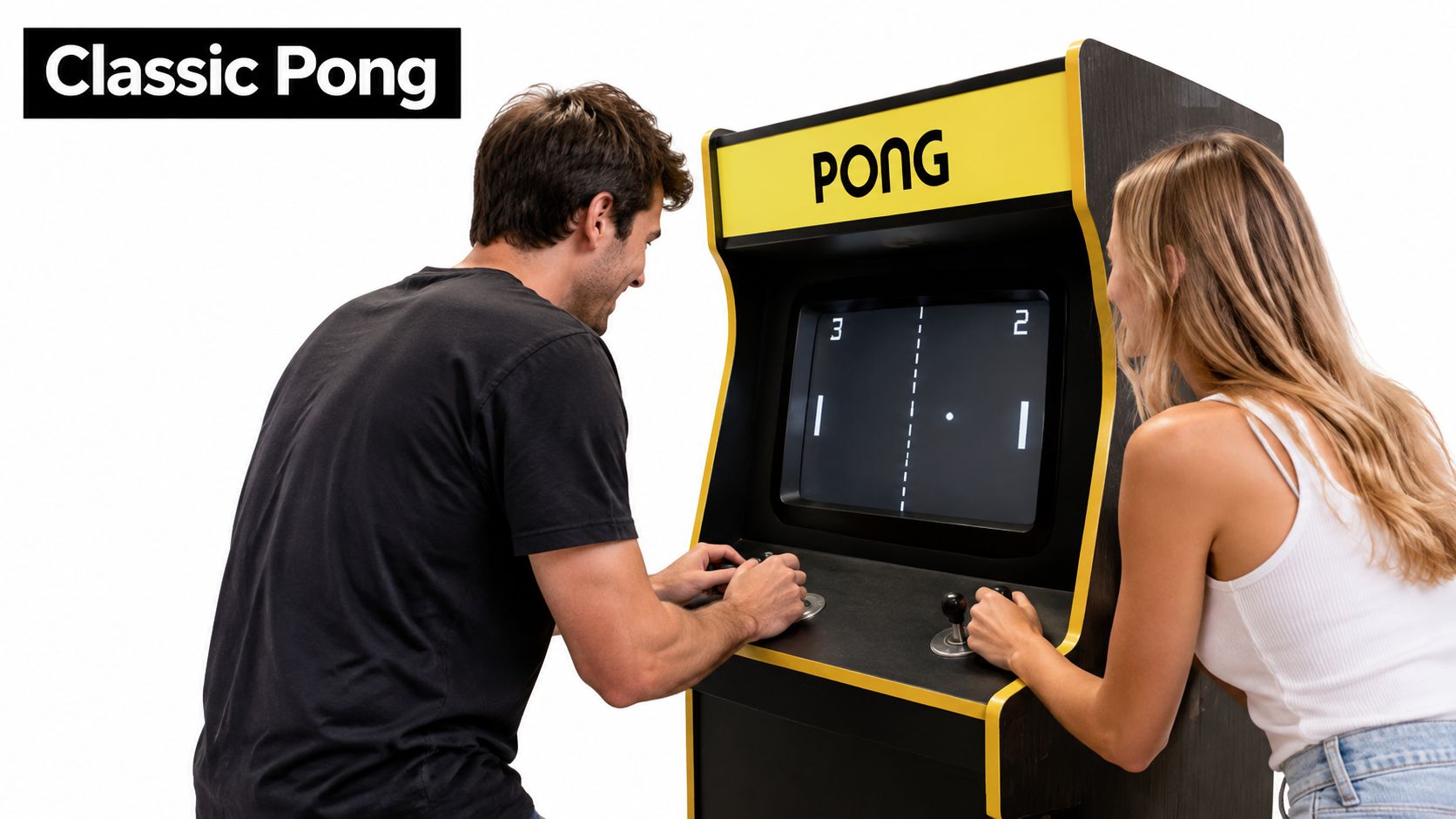
Pong is a clean, low-pressure way to get guests playing. Two players move paddles to volley a ball across the screen, so the basic idea is easy to grasp without a rules briefing. That makes it useful as an icebreaker at a company event, a warm-up before a tournament, or a familiar option for families with mixed gaming experience.
A simple game with a social format
Pong works best when the setup encourages guests to challenge one another instead of treating the cabinet as a solo attraction. Place the game where both players can stand comfortably, and leave room behind them for a small audience. If you're planning a team event, use two stations facing each other or set them side by side so guests can move through a friendly bracket.
The game's simplicity is a strength, but it can also limit how long players stay engaged. Guests looking for complex mechanics or a dramatic visual spectacle may move on quickly. Use Pong as one part of a varied lineup rather than expecting it to hold the room on its own.
Good fit: Give each player a brief turn, then invite the winner to defend their score. A visible scoreboard gives newcomers a reason to join without making the game feel like a high-pressure competition.
For a retro theme, tabletop and cabinet-style versions make a recognizable focal point without needing a large play area. Before booking, check the unit's footprint, power needs, and whether it arrives ready to play. For more ideas on choosing arcade game rentals, compare the format with the room and the guest mix, not just the title on the cabinet.
2. Space Invaders
At an event, Space Invaders gives a solo player a clear score to chase while nearby guests can follow the action. Players move a cannon, aim at the descending formation, and try to beat the current high score. The screen is easy to read from a short distance, making the cabinet a natural spectator stop without requiring a crowd to join in.
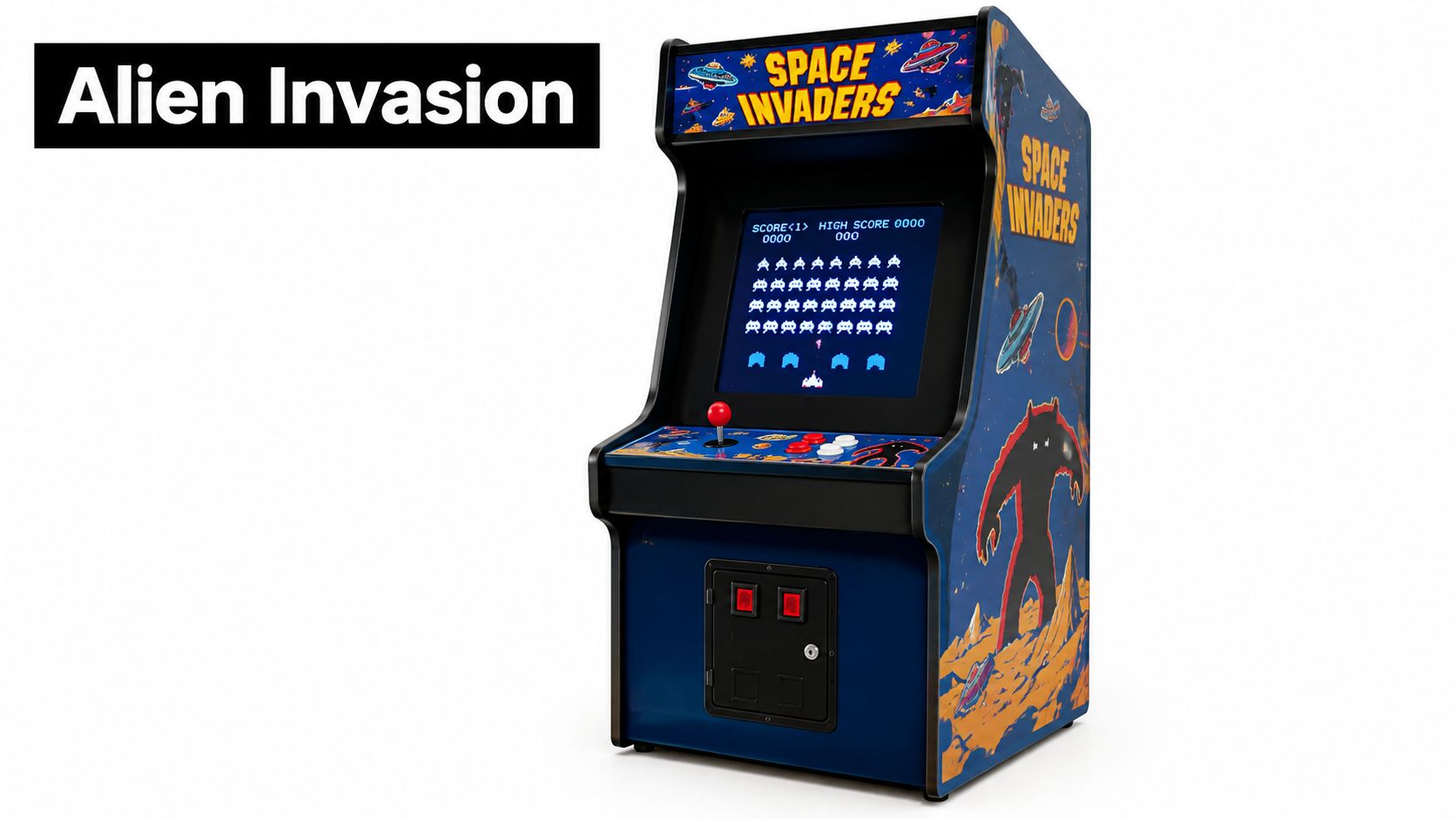
Use the high-score chase carefully
A score challenge can suit a school fundraiser or company picnic. Post the turn-taking and winner rules where guests can see them. If you offer a prize, keep the process straightforward so questions don't slow the queue.
Sound helps draw attention, but the cabinet's effects can carry through a busy room. Set it away from speeches, presentations, and quieter activities, and ask the rental operator whether the volume can be adjusted. In a high-traffic spot, set a clear turn limit and rotate players regularly.
Space Invaders suits guests who enjoy a solo, score-based challenge. It is less naturally social than a two-player cabinet, so pair it with a head-to-head game or a physical skill attraction to give guests another way to play. For a steady queue, limit each turn to a set time or a fixed number of lives. This keeps a determined player from occupying the cabinet for too long and gives more guests a chance to take part.
3. Pac-Man
Pac-Man is an easy choice when you want a classic game with a simple objective and a friendly appearance. Players guide the character through a maze, collect dots, and avoid ghosts. Newcomers can start playing quickly, while experienced guests can chase a higher score or try to last longer.
Make it welcoming for first-timers
At a family night or community festival, give guests a practice turn before you start tracking scores. That small adjustment helps people learn the movement and understand how the game works without feeling that they've already lost a competition. A themed backdrop or a visible marquee can make the cabinet easier to spot in a crowded room, but don't block access to the controls or create a bottleneck around the machine.
Pac-Man's recognizable look makes it a useful anchor for a retro-themed arcade area. It can also work well alongside other maze, shooting, or platform games, giving guests a choice between different styles of play. If you're planning a tournament, use timed turns or a consistent session limit so the scoring feels fair and the queue keeps moving.
The experience can still exclude some guests if the cabinet's height, joystick, or surrounding clearance doesn't suit their needs. Ask the rental operator what version is available and whether guests can approach and use the controls comfortably. A famous title isn't automatically an accessible one, so consider the cabinet and room setup as well as the game itself. For another classic arcade option, compare Pac-Man with Battlezone and consider which style better fits your event's space and audience.
4. Donkey Kong
Donkey Kong suits guests who like a visible, skill-based challenge. Players move through platform levels, climb ladders, and avoid obstacles, making the action easy for nearby spectators to follow. It gives a retro game area a strong focal point, especially when families or school groups want to compare scores.
Set the rules before the line forms
Long turns can create a queue, particularly when players are determined to keep trying until they beat a level. Establish a session limit before play starts, and explain it clearly. A short turn keeps the attraction approachable for people who are waiting and gives more guests a chance to try the game.
The cabinet usually works best where a small group can gather without blocking a corridor, entrance, or neighboring attraction. Allow the player enough room to use the controls and leave space for spectators behind or beside them. If you're planning a family event, a family-versus-family high-score challenge can encourage different generations to join in without requiring everyone to have the same skill level.
A leaderboard draws a crowd only if guests can understand how to enter it. Post the scoring rules beside the machine and keep the play area clear.
Donkey Kong can support a themed event with familiar character-inspired decorations or small prizes, but the game should remain the attraction rather than the décor. Ask whether the rental unit is an original cabinet, a reproduction, or an emulated version, since controls and presentation can differ. Preservation work highlights why arcade experiences shouldn't be reduced to a game's name alone: original hardware and how a game functions are part of what operators and visitors may want to preserve. (MAME preservation report)
5. Street Fighter II: The World Warrior
Street Fighter II is built for direct competition. Two players face off at the same cabinet, and the match gives spectators an obvious reason to gather. It can be the competitive centerpiece of an event, especially when guests already enjoy fighting games or want a bracket to follow.
Keep competition welcoming
A tournament works better when first-time players know what to expect. Set up a practice opportunity before the bracket begins, and post simple instructions for selecting a character and starting a match. If the controls include more buttons than guests are used to, a short guide to basic moves can reduce the learning curve without turning the event into a lesson.
Skill gaps can make an open bracket discouraging for newer players. Consider separate brackets by age or experience, or pair experienced players with newcomers for casual matches before the main competition. A nearby screen can help spectators follow the action, but it also needs space, safe cable routing, and a clear view that doesn't block the playing area.
This game asks more of its players than a simple reaction or button game. It's a better fit for guests who want to compete than for a quick, no-explanation turn, so balance it with accessible options elsewhere in the room. Confirm with the rental provider how the unit is configured, whether the controls are in good working order, and who will handle any technical issues during play.
6. Dance Dance Revolution
Dance Dance Revolution turns a game station into a performance space. Players step on directional arrows in time with on-screen prompts, while friends can watch, cheer, and take turns. It's a natural draw at a school dance, youth event, or community celebration, but the physical format calls for more planning than a standard cabinet.
Give players room to move
Put the dance pad on a flat, stable, non-slip surface and keep the surrounding area clear. Spectators should be able to watch without standing in the player's path, and the station shouldn't spill into a walkway. Ask the rental operator about the pad's footprint, power connection, and placement requirements before confirming the venue layout.
The game's intensity can be adjusted through song and difficulty choices. Start with easier settings for younger children and guests who haven't played before, then invite confident players to raise the challenge. Short, rotating sessions keep the station active while giving guests time to rest between turns.
Accessibility needs deserve particular attention here. The game's standing, stepping-based controls won't suit every guest, so offer other attractions nearby and avoid presenting participation as compulsory. If possible, ask the provider whether there are alternate ways to take part, such as spectating, selecting music, or supporting a teammate.
Here's a short look at dance-game play in action:
7. Skee-Ball
Skee-Ball is a strong choice for family events because the action is physical, visible, and easy to explain. Players roll balls up an inclined lane toward scoring rings, and people nearby can see how each attempt goes. It brings a carnival feel without requiring every guest to be familiar with video-game controls.
Plan for lanes and prizes
The main space requirement isn't just the machine. Players need room to stand, roll, and retrieve balls, while the queue needs to remain separate from the play area. Multiple lanes can make it easier for families or teams to compete side by side, but confirm the footprint and delivery route before you book.
If the event includes tickets or prizes, settle the rules with the rental operator in advance. Make sure the prize tiers are clear to guests and that someone knows how to handle questions. A visible score or prize sign helps, but don't place it where it narrows the lane or blocks the next player.
Skee-Ball rewards aiming and repeated attempts, which makes it a useful contrast to digital cabinets. It can work well at a fundraiser or community fair, especially when the organizers want guests to play in small groups. Consider whether the guests can reach and use the machine comfortably, and ask about the lane's height and ball return before choosing a location.
For events where the classic alley format won't suit the venue, a soft-play alternative may be worth considering. Compare the space and operating requirements of inflatable Skee-Ball with those of a traditional lane before deciding which format fits the floor plan.
8. Whac-A-Mole
Whac-A-Mole works as a quick reaction challenge with a very low explanation burden. Moles pop up across the board, and the player tries to hit them before they disappear. The fast, visible action gives spectators something to watch, while short rounds make it easier to keep a line moving.
Put it where the energy helps
This attraction can draw attention near a prize area, snack zone, or carnival-style game cluster. Leave enough room for the player to swing safely and for spectators to stand outside the play area. If the event space is busy, use a clear queue line and set a maximum number of attempts per guest during peak periods.
A posted high-score board can encourage repeat play, but keep the competition friendly. Some guests will prefer to watch rather than play, and the mallet-based action may not suit every participant. Offer another nearby game with seated or simpler button-based controls so the area gives people different ways to join in.
The simple format also makes it useful as a short-play station between longer activities. It won't provide the depth of a fighting-game tournament, but it can give guests a lively break and keep the arcade area feeling active. Ask the provider about the unit's dimensions, safe clearance, and operator requirements, then place it where the line won't obstruct other attractions.
Comparison of 8 Classic Arcade Games
| Arcade Game | 🔄 Implementation Complexity | ⚡ Resource Requirements | 📊 Expected Outcomes | 💡 Ideal Use Cases | ⭐ Key Advantages |
|---|---|---|---|---|---|
| Pong (1972) | Low; simple controls and rules | Cabinet or reproduction; space for two players | Quick rounds and friendly head-to-head competition | Icebreakers, family events, retro themes | Easy to learn; nostalgic; keeps turns short |
| Space Invaders (1978) | Low; intuitive movement and firing | Single cabinet; space for one player at a time | High-score competition with rising difficulty | Retro arcade lineups, score challenges | Familiar gameplay; engaging difficulty curve |
| Pac-Man (1980) | Low to moderate; simple controls, strategic play | Single cabinet; rotating turns | Score chasing and broad audience engagement | Family events, themed setups, casual tournaments | Recognizable; easy to start, challenging to master |
| Donkey Kong (1981) | Moderate; timing and obstacle navigation | Single cabinet; short-session limits can help manage queues | Skill-based score competition | Retro events, family challenges, game-history displays | Clear goals; iconic characters; multiple stages |
| Street Fighter II: The World Warrior (1991) | High; multiple buttons and learnable move combinations | Cabinet; two players, with optional spectator display | Competitive matches and tournament play | Fighting-game tournaments, teen and adult events | Deep mechanics; strong replay and spectator appeal |
| Dance Dance Revolution (1998) | Moderate; requires safe setup and pad maintenance | Dance pad, flat non-slip floor space, power | Active, music-led participation and crowd engagement | School dances, youth events, recreation or fitness activities | Physical and social; adjustable difficulty; spectator-friendly |
| Skee-Ball (1908) | Low to moderate; simple play, but prizes and tickets need management | One or more lanes, balls, and optional ticket/prize supplies | Repeat play, group competition, and possible prize redemption | Carnivals, fairs, fundraisers, family events | Accessible; multiple players can play at once; tactile gameplay |
| Whac-A-Mole (1975) | Low; straightforward controls and short rounds | Compact machine; mallets and mechanisms need upkeep | Fast-paced play and quick-moving queues | Carnivals, fundraisers, busy event areas | Easy to understand; compact; supports score challenges |
Build a Balanced Arcade Lineup
A strong event arcade isn't a row of famous cabinets chosen by name alone. Build a mix that offers different reasons to play: quick-turn options such as Pong or Whac-A-Mole, a skill-based attraction such as Skee-Ball, and a competitive focal point such as Street Fighter II. Pac-Man, Space Invaders, and Donkey Kong can add recognizable solo challenges, while Dance Dance Revolution brings movement and performance to the room.
Start with the guest mix and venue. A school event, company picnic, and community festival may all need different combinations of games, space, staffing, and sound control. Check whether guests can play seated or standing, whether controls require two hands, whether flashing visuals or audio cues could be a concern, and whether spectators can gather without blocking access. Inclusion depends on the game, cabinet, controls, environment, and operating setup, so ask the rental provider specific questions rather than assuming a well-known title will suit everyone.
Then confirm the practical details before booking: venue dimensions, expected attendance, power access, floor conditions, delivery route, and how the attractions will be operated. If you're offering prizes, agree on the ticket and prize process in advance. Ask whether machines are original cabinets, modern reproductions, or emulated systems; each can serve a different purpose, from historical authenticity to convenient event play. Reliability, queue flow, spectator visibility, age fit, and the provider's plan for troubleshooting all matter.
A balanced lineup doesn't need every guest to play every game. It should give guests a comfortable choice, make participation easy to understand, and provide ways to watch or support others. For turnkey events across Pennsylvania and the Mid-Atlantic, Phantom Entertainment offers arcade games alongside carnival and other event attractions, with delivery, setup, operation, and venue-ready documentation available. Share your venue details and event goals when you request options so the proposed lineup can match the space and the crowd.
Phantom Entertainment offers arcade game rentals, classic cabinets, and other attractions for school, corporate, and community events. Explore the options and discuss your venue, audience, and setup needs with Phantom Entertainment.
Ready to Book Your Event?
PA state-inspected, fully insured since 1979. Call us or get a free quote today.